
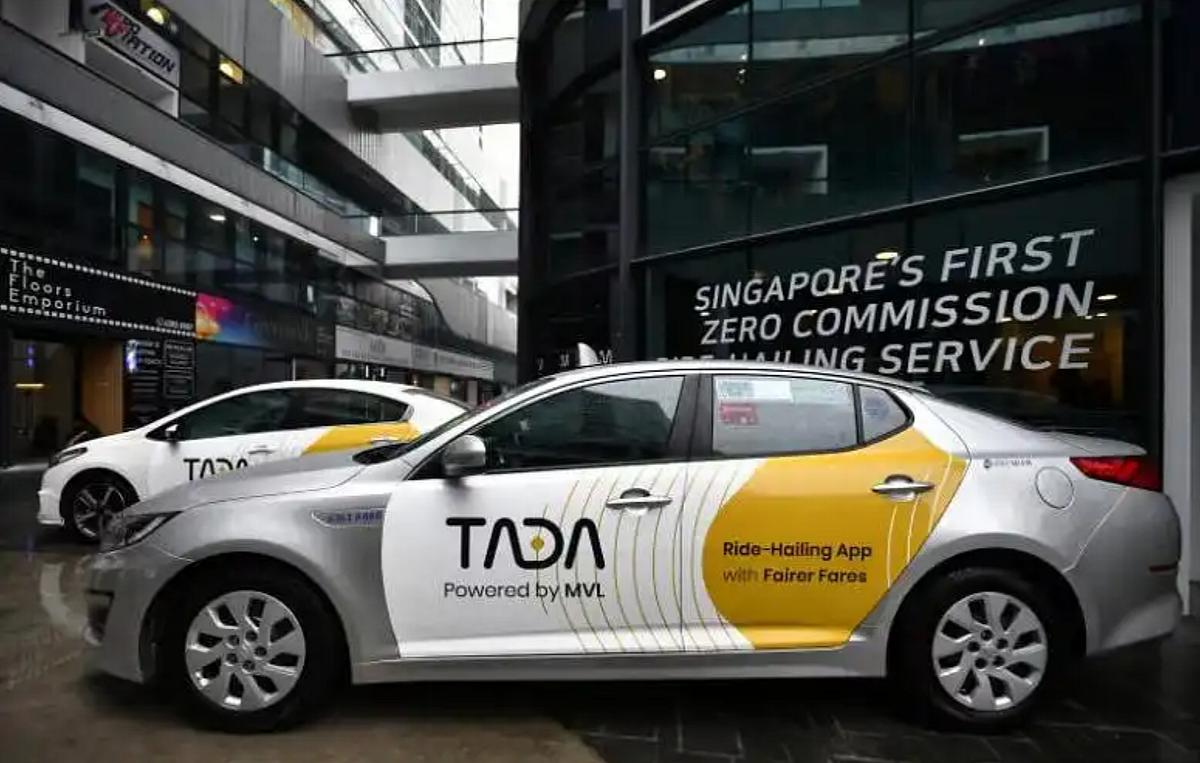
TADA Web3 Taxi App New York Launch Tests Zero-Commission Ride-Hailing
The TADA Web3 taxi app New York launch marks a structural shift in how ride-hailing platforms operate. After building scale across Asia, TADA plans to officially launch in New York City in June 2026. The company enters one of the world’s most competitive mobility markets with a blockchain-first operating model.
Instead of acting as an intermediary, TADA positions itself as software infrastructure. Drivers and riders connect through smart contracts, while users pay a small flat software fee. According to co-founder Kay Woo, this approach improves transparency and rebalances earnings across the network.
As a result, the New York rollout places TADA directly against entrenched incumbents such as Uber and Lyft. However, the company argues that its economics, not its branding, define the disruption.
How the Zero-Commission Model Reshapes Incentives
At the core of the TADA Web3 taxi app New York launch is a zero-commission pricing structure. Drivers pay a flat fee, typically between 78 and 92 cents per ride. In contrast, the platform does not take a percentage of fares.
Because of this structure, drivers retain more predictable earnings. Meanwhile, riders benefit from lower and clearer pricing. Rather than optimizing for commission extraction, TADA optimizes for network usage.
Furthermore, blockchain-based smart contracts automate transactions and ride records. These contracts reduce disputes while improving operational transparency. Over time, this infrastructure-first approach aims to replace commission-heavy gatekeeping models.
Established Market Share and Revenue Growth in Asia
TADA was founded in Singapore in 2018 by Kay Woo and Jay Han, two South Korean entrepreneurs. From the start, the company focused on dense, competitive markets that could validate its model.
In 2022, TADA captured 11.1% of Singapore’s ride-hailing market, according to Measurable AI. By October 2024, the company reported $19.8 million in revenue, up from $15.7 million in 2023. These results reflect steady platform adoption rather than rapid subsidy-driven growth.
Subsequently, TADA expanded into Cambodia and Vietnam in 2019. Later, the company entered Thailand and Hong Kong in 2024. Together, these markets provided operational proof points ahead of the U.S. expansion.
Early Failures That Shaped the Platform Strategy
The TADA Web3 taxi app New York launch also represents a full-circle moment for Woo. His first startup attempt in New York in 2012 failed to gain traction. At the time, the product lacked a clear revenue engine.
After that experience, Woo shifted his focus. He and Han returned to Asia and identified inefficiencies in cross-border mobility between Hong Kong and Shenzhen. While Uber and DiDi were popular, neither addressed cross-border transport needs.
As a result, TADA began by digitizing manual reservation systems. The early success of this niche validated a revenue-first mindset. Singapore later became the launch market due to its density and infrastructure reliability.
Revenue Streams Beyond Ride Fees
Beyond flat ride fees, TADA operates within a broader Web3 ecosystem under its parent company, MVL. This structure supports multiple revenue streams without increasing driver commissions.
With user consent, the company sells anonymized vehicle and driving data to ecosystem partners. Additionally, TADA issues MVL tokens, which trade on external cryptocurrency exchanges. These elements support platform sustainability while preserving its zero-commission promise.
Consequently, the TADA Web3 taxi app New York launch reflects a diversified platform strategy rather than a single-market bet.
Why New York Is the Ultimate Stress Test
New York City represents one of the toughest ride-hailing environments globally. Regulatory scrutiny, driver dissatisfaction, and platform fees already shape the market dynamics.
Currently, TADA is trialing its technology in Denver. However, the official New York launch serves as the company’s primary U.S. entry point. According to Woo, many drivers feel trapped by high commissions and limited alternatives.
Therefore, TADA positions itself as a choice rather than a replacement. The company frames legacy platforms as first-wave disruptors that later adopted capital-heavy models. In contrast, TADA argues that infrastructure-led systems can realign incentives.
Explore the services of Uttkrist, our services are global in nature and highly enabling for businesses of all types, drop us an inquiry in your suitable category: https://uttkrist.com/explore
What the Launch Signals for Web3 Mobility
The TADA Web3 taxi app New York launch places decentralized infrastructure into direct competition with centralized ride-hailing platforms. Its outcome will indicate whether flat-fee, smart contract-based systems can scale in mature markets.
As urban mobility costs rise, alternative economic models gain relevance. New York will test whether drivers and riders adopt platforms that prioritize transparency over extraction.
Will infrastructure-first ride-hailing redefine competition when real choice enters the market?
Explore Business Solutions from Uttkrist and our Partners’, Pipedrive CRM [2X the usual trial with no CC and no commitments] and more uttkrist.com/explore