
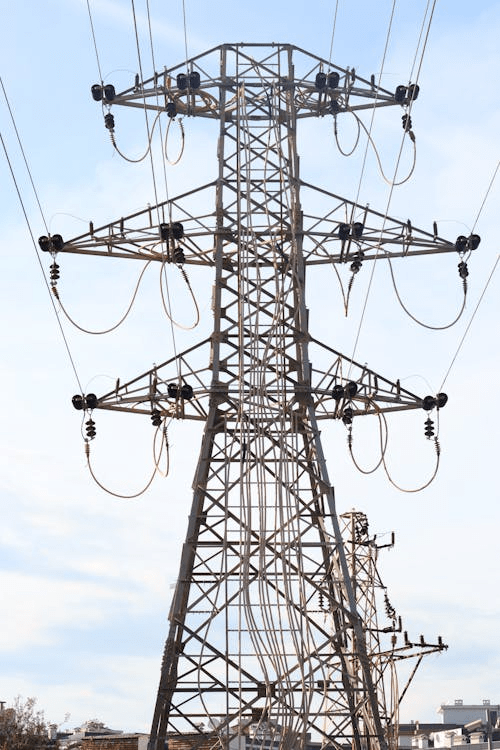
Electrical grid software demand surge: How 2025 reshaped power infrastructure
The electrical grid enters a new era of software dependency
The electrical grid software demand surge became one of 2025’s most defining infrastructure shifts.
Fires in California, freezes in Texas, rising electricity prices, and rapid data center expansion forced the grid into public focus.
Electricity rates increased 13% in the U.S. during 2025.
The rise came as artificial intelligence workloads expanded into unexpected areas. These included repurposed jet engines for data centers and experiments in space-based solar power delivery.
Meanwhile, electricity consumption by data centers is projected to nearly triple over the next decade.
That forecast triggered consumer frustration and growing pressure from environmental groups, including calls for a nationwide pause on new projects.
Utilities now face urgent capacity challenges. They must upgrade aging infrastructure while managing long-term investments under regulatory scrutiny.
As a result, the electrical grid software demand surge accelerated.
Electrical grid software demand surge reshapes infrastructure planning
A new wave of startups argues that unused capacity already exists within the grid.
They believe software can reveal it.
Gridcare compiles data from transmission lines, fiber networks, extreme weather, and community sentiment.
The company uses that information to locate overlooked sites and demonstrate grid readiness.
Yottar identifies locations where known capacity aligns with the needs of medium-sized users.
It helps them connect quickly during the data center expansion.
Together, these efforts highlight how software now drives grid planning, not only hardware expansion.
Virtual power plants expand through software coordination
Several startups are assembling distributed battery fleets into virtual power plants.
Base Power leases batteries to Texas homeowners at relatively low prices.
Residents receive backup power.
Base Power aggregates unused capacity and sells it to the grid to prevent outages.
Terralayr uses software to bundle storage assets already installed across the German grid.
Unlike Base Power, it does not sell batteries directly.
Both models show how software converts scattered assets into reliable grid resources.
Electrical grid software demand surge accelerates renewable integration
Other companies focus on integrating distributed energy sources.
Texture, Uplight, and Camus develop software layers that coordinate wind, solar, and battery systems.
Their goal is to reduce idle time and maximize grid contribution.
In parallel, technology firms entered the modernization effort.
Nvidia partnered with EPRI to build industry-specific models to improve grid efficiency and resiliency.
Google is working with grid operator PJM to apply AI to its backlog of new electricity connection requests.
These efforts will not transform the grid overnight.
However, 2026 may mark the first large-scale operational impact.
Utilities confront the economics of modernization
Utilities traditionally adopt new technologies cautiously.
Reliability concerns slow deployment.
Infrastructure investments are costly and long-lived.
Ratepayers and regulators often resist projects that affect affordability.
However, software changes that equation.
Software costs less than physical infrastructure.
It deploys faster.
If reliability standards are met, adoption becomes likely.
The electrical grid software demand surge therefore represents not just innovation but economic necessity.
Software becomes the grid’s most flexible asset
The grid requires refurbishment and expansion.
Planned data centers, transportation electrification, heating systems, and industrial shifts demand far more power.
Ignoring software’s role would be imprudent.
It remains the cheapest, most flexible, and fastest solution available to utilities today.
For enterprises navigating this transformation, the same principles apply.
Efficient systems, data-driven operations, and scalable platforms now define resilience.
To support organizations adapting to such infrastructure and technology shifts, Explore the services of Uttkrist, our services are global in nature and highly enabling for businesses of all types, drop us an inquiry in your suitable category: https://uttkrist.com/explore.
Strategic process management also matters — including intelligent CRM deployment such as Pipedrive CRM [2X the usual trial with no CC and no commitments], which strengthens operational execution as business complexity rises.
The next phase of power infrastructure
The grid no longer operates quietly in the background.
It now sits at the center of economic growth, AI expansion, and climate resilience.
The electrical grid software demand surge signals a permanent shift in how nations manage power.
If software can continue clearing the reliability hurdle, who will control the next generation of global energy infrastructure?
Explore Business Solutions from Uttkrist and our Partners’, https://uttkrist.com/explore