
Negative Electricity Prices in Europe Signal Energy Market Shift as U.S. Consumer Bills Rise
Europe’s energy market is undergoing a structural transformation.
Negative electricity prices in Europe are becoming more common as renewable generation expands faster than consumption. Meanwhile, U.S. households face sharply rising power bills. This divergence is reshaping global energy economics, consumer affordability, and long-term infrastructure planning.
The trend of negative electricity prices in Europe is no longer rare. It is increasingly structural.
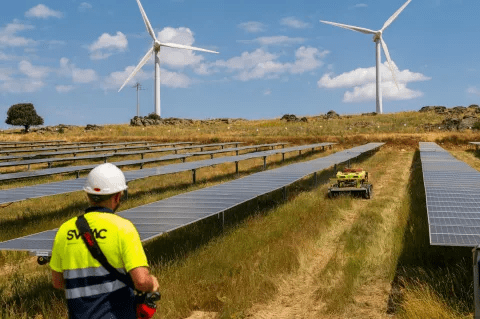
In Spain alone, installed solar capacity surged from nearly 9 gigawatts in early 2020 to 32 gigawatts by early 2025, supported by subsidies. However, energy storage remains limited. Consequently, on especially sunny and windy days, electricity supply now exceeds demand. Prices drop below zero.
By September, Spain had already recorded over 500 hours of negative prices for the year. That figure more than doubled the full-year total from 2024. France crossed 400 hours. Germany was on a similar trajectory.
Wholesale electricity traders now sometimes pay others to take surplus power.
However, households do not receive payments. Retail prices are typically set in advance. Yet, in markets with dynamic pricing, the impact eventually reaches consumers.
During the first half of the year, electricity prices for households in the European Union fell 1.5% compared with the first half of 2024. Excluding taxes, prices declined even more and have been sliding since 2023. This follows sharp spikes in 2021 and 2022.
Negative Electricity Prices in Europe Are Disrupting Energy Investment Economics
While consumers benefit from lower prices, producers face mounting pressure.
Negative pricing is weighing on profits and valuations for solar plants. As a result, developers are cooling new project investments. This is happening even where land, permits, and grid connections are already secured.
Developers are now seeking exits.
A senior executive from a Spanish solar plant owner described the situation: “The market is flooded with ready-to-build projects that developers want to sell since they’re no longer good enough in the current market.”
Meanwhile, governments across Europe are racing to expand battery storage. However, in the short term, oversupply continues to distort pricing.
This environment is redefining how energy assets are financed, valued, and deployed across the continent.
U.S. Electricity Prices Rise as AI Infrastructure Drives Demand
Across the Atlantic, the picture is very different.
U.S. electricity prices are climbing. Consumer frustration is growing. Utilities are rapidly building capacity to meet soaring demand from AI data centers.
The affordability crisis worsened after post-pandemic inflation and was compounded by tariffs imposed under President Donald Trump. Although annual inflation has cooled since peaking in 2022, cumulative price increases over the past five years remain painful for households.
In November, electricity prices in the United States were up 6.9% year over year on an unadjusted basis.
Negative pricing does occur in the U.S. on occasion, particularly in Texas. The state’s deregulated grid and strong wind capacity allow for short-term surplus events. However, the Trump administration is now cutting renewable subsidies and halting wind projects, reducing the likelihood of sustained price relief.
Strategic Implications for Energy Systems and Markets
These opposing trajectories highlight the complexity of energy transition economics.
Europe demonstrates the success of rapid renewable deployment. Yet it also exposes the consequences of insufficient storage and demand balancing. The U.S., meanwhile, confronts explosive demand growth driven by AI, with limited immediate price relief for consumers.
For decision-makers, energy systems now require new forms of coordination across generation, storage, pricing, and infrastructure investment.
This is precisely where operational, financial, and market-structuring expertise becomes decisive.
Explore the services of Uttkrist. Our services are global in nature and highly enabling for businesses of all types. Drop an inquiry in your suitable category: https://uttkrist.com/explore/
As negative electricity prices in Europe continue reshaping power markets, the world faces a deeper question: how can energy systems remain affordable, investable, and resilient while demand and supply accelerate in opposite directions?
Explore Business Solutions from Uttkrist and our Partners’, https://uttkrist.com/explore