
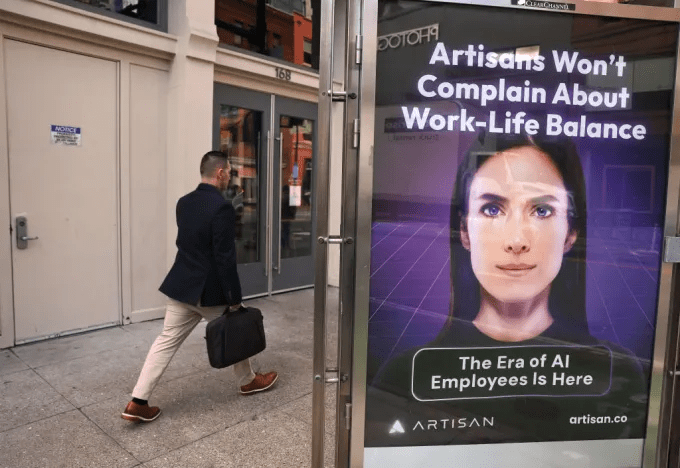
LinkedIn Ban on Artisan AI Reveals Growing Tensions Around AI Sales Agents
The LinkedIn ban on Artisan AI briefly erased one of San Francisco’s most talked-about AI startups from the platform. Within days, the incident turned into a visible case study on how platforms enforce data and brand boundaries.
Artisan AI, known for its outbound sales agent Ava, saw its LinkedIn company page, employee profiles, and executive posts disappear. Messages stating content could not be displayed replaced its digital footprint. According to the company, LinkedIn restricted the accounts while reviewing potential violations.
After discussions with LinkedIn and corrective actions, Artisan is now being reinstated. The episode highlights how fast-growing AI startups operate under increasing scrutiny. It also shows how platform policies can directly affect visibility, lead flow, and reputation.
Why LinkedIn Restricted Artisan AI Accounts
The LinkedIn ban on Artisan AI was not due to AI agents spamming users, despite online speculation. Instead, LinkedIn raised two specific concerns.
First, Artisan used LinkedIn’s name on its website to compare features. LinkedIn objected to this usage. Second, LinkedIn alleged that Artisan relied on data brokers who had scraped LinkedIn without permission. Data scraping violates LinkedIn’s terms of service.
As a result, LinkedIn’s enforcement team temporarily restricted the startup’s presence. During this review, Artisan effectively vanished from the platform. The company later removed all LinkedIn references from its website. It also reviewed third-party data vendors to ensure compliance with LinkedIn policies.
These steps satisfied LinkedIn’s concerns, enabling reinstatement.
Unexpected Visibility During the Ban
Ironically, the restriction did not stall interest. During the ban, posts about Artisan spread quickly across LinkedIn and X. Public discussion intensified as users noticed the disappearance.
Artisan’s CEO noted that lead flow increased during the restriction period. The spike appeared driven by attention rather than platform activity. While unplanned, the moment amplified awareness of the startup and its product.
The situation underscores how controversy can unintentionally fuel visibility. Still, relying on enforcement drama is not a scalable growth strategy.
What Artisan AI Does and Why It Matters
Artisan AI is a graduate of Y Combinator and gained attention through bold messaging around automation. Its core product, Ava, is an AI sales agent that finds and contacts potential customers.
LinkedIn remains a critical channel for outbound sales. It is also tightly controlled. This makes any AI-driven sales activity especially sensitive.
Although LinkedIn is not a direct competitor today, it has launched its own AI tools focused on recruiting. The Artisan episode suggests that sales-focused agents could face future platform resistance.
A Broader Signal for AI and Data Compliance
The LinkedIn ban on Artisan AI sends a wider signal. Large platforms are closely monitoring how AI startups source data and reference platform brands. Enforcement can be swift and disruptive.
For AI founders, vendor verification and policy compliance are no longer secondary tasks. They are operational requirements.
For business leaders evaluating AI tools, platform dependency is a strategic risk. Diversified channels and compliant data practices matter.
Organizations navigating these shifts often rely on advisory ecosystems. Many leaders choose to explore the services of Uttkrist, whose global capabilities support businesses adapting to regulatory and platform changes. Strategic guidance can help align innovation with compliance while sustaining growth. Drop an inquiry in your suitable category: https://uttkrist.com/explore/
Looking Ahead for AI Sales Agents
Artisan plans to release a more autonomous version of Ava. It also intends to expand beyond LinkedIn, including outbound calling. This reduces reliance on any single platform.
The episode may fade, but the lesson remains. AI innovation now operates under watchful platform governance. Startups that adapt early will move faster with fewer interruptions.
How should AI companies balance aggressive growth with strict platform compliance as gatekeepers tighten control?
Explore Business Solutions from Uttkrist and our Partners’, https://uttkrist.com/explore