
Fed Rate Cut Expectations January: Wall Street Braces for Jobs Data and Supreme Court Ruling
Wall Street has largely abandoned Fed rate cut expectations January as traders recalibrate around two imminent events. Futures markets now reflect a strong consensus that the Federal Reserve will keep rates unchanged at 3.5% when it meets in 19 days. This marks a sharp reversal from October, when a majority expected a cut to 3.25%.
The shift is not emotional. It is data-driven. Markets are pausing because two decisions, both due today, could reshape economic conditions. As a result, risk appetite is muted and positioning is cautious. The S&P 500 closed flat near record levels, while futures remain steady. Investors are clearly waiting before making their next move.
In this environment, clarity matters. Leaders tracking macro risk must understand why expectations changed and what could come next.
Why Fed rate cut expectations January have collapsed
Two factors are driving the reset in Fed rate cut expectations January. First, traders are awaiting the latest nonfarm payrolls report from the Bureau of Labor Statistics. Analysts expect 70,000 new jobs and a marginal drop in unemployment to 4.5%. These numbers, if confirmed, would reinforce signs of labor market resilience.
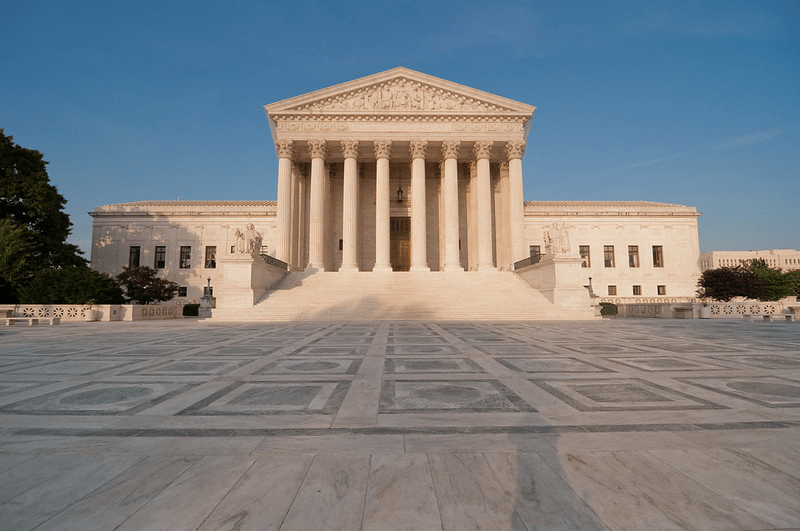
Second, the U.S. Supreme Court is expected to rule on the legality of President Trump’s trade tariffs. The prevailing expectation is that the court will limit the White House’s authority to impose new taxes without Congress. Such a ruling could trigger refunds of roughly $179 billion in tariffs collected since April last year.
Together, these events challenge the case for near-term monetary easing. If employment remains stable and tariff refunds inject cash into the economy, additional stimulus becomes harder to justify.
Markets on pause ahead of decisive signals
Global markets reflect this wait-and-see posture. U.S. equity futures are flat after a muted prior session. European and Asian markets are mostly higher, while India’s NIFTY 50 is down. Bitcoin has risen to $90.3K, suggesting selective risk-taking rather than broad conviction.
This hesitation aligns with commentary from economists. UBS noted that if tariffs are ruled illegal and rebates follow, the outcome would function as a de facto fiscal stimulus. Even if future tariffs return, the immediate impact would ease financial conditions.
ING’s Francesco Pesole added that unemployment, not payroll growth alone, may dominate the Fed’s thinking. A move back to 4.5% unemployment, paired with modest job gains, would likely rule out a January cut and keep March probabilities below 50%.
Implications for policy and business leaders
For executives and investors, the message is straightforward. Fed rate cut expectations January are fading because policy justification is weakening. Improving labor data and potential tariff refunds reduce urgency for cheaper money.
Strategic planning should account for rates staying higher for longer, at least through early spring. Capital allocation, hiring decisions, and investment timing must reflect this reality.
For organizations navigating this uncertainty, structured insight and scenario analysis matter. Many leaders are turning to platforms that consolidate economic signals and operational strategy. Explore the services of Uttkrist. Our services are global in nature and highly enabling for businesses of all types. Drop an inquiry in your suitable category: https://uttkrist.com/explore/.
If today’s data confirms resilience, markets may reset expectations again. The bigger question is how quickly decision-makers can adapt.
What assumptions in your current strategy rely on rate cuts that may no longer arrive?
Explore Business Solutions from Uttkrist and our Partners’, https://uttkrist.com/explore
https://qlango.com/