
Amazon Bee AI Wearable Tests the Limits of Everyday Conversation Recording
Amazon Bee AI wearable enters the consumer hardware space with a simple premise. It records conversations on demand, segments them, and summarizes each section inside a mobile app. Early hands-on testing shows a product that is easy to operate, thoughtfully designed, and deliberately positioned away from professional transcription tools.
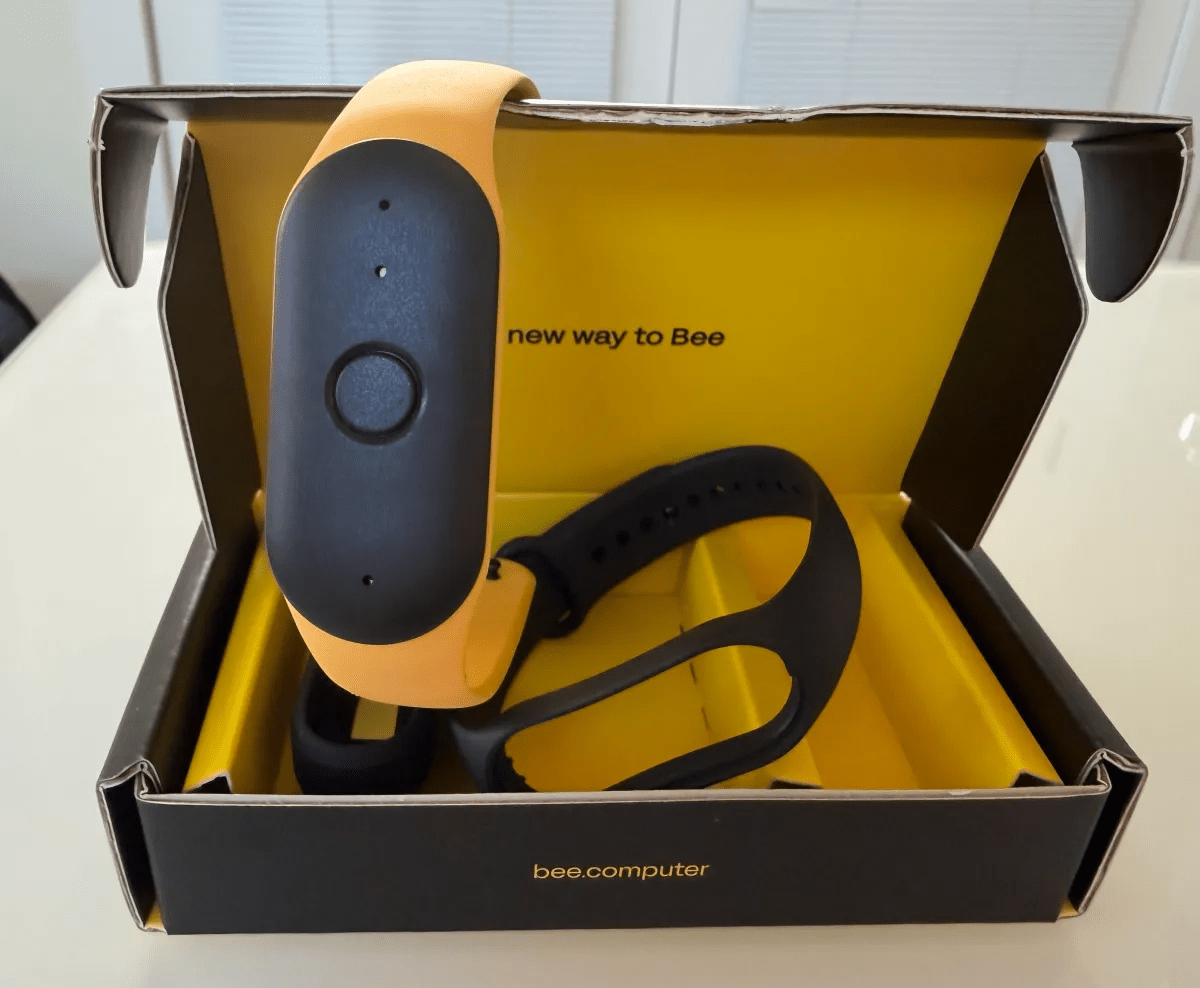
The Amazon Bee AI wearable works through a physical button. A single press starts or stops recording. In the companion app, users can assign actions to gestures. A double press can bookmark or process a conversation. A press-and-hold can create a voice note or initiate a chat with the assistant. The app actively reminds users to enable voice notes.
Unlike raw transcription tools, the Amazon Bee AI wearable divides audio into thematic sections. Each segment is summarized and displayed with a different background color. Users can tap into any section to view the full transcription. This structure prioritizes recall and context rather than verbatim records.
How Amazon Bee AI Wearable Differs From Other AI Transcription Tools
The Amazon Bee AI wearable overlaps with products that listen, record, and transcribe audio. However, it avoids positioning itself as a work-focused tool. It does not aim to replace professional transcribers.
Speaker labeling exists but feels limited. Users must manually confirm their own voice within a segment. This approach lacks the precision seen in professional-grade transcription software. In addition, Bee deletes the original audio after transcription. That decision removes the ability to replay recordings for accuracy checks.
These constraints signal intent. The Amazon Bee AI wearable is designed as a memory companion, not a compliance or productivity system.
Amazon Bee AI Wearable as a Daily-Life Companion
Amazon frames Bee as an AI that lives alongside the user. By integrating with Google services, Bee can connect conversations to actions. After meeting someone, it may suggest adding them on LinkedIn or researching their product.
Users can also leave voice notes instead of typing. A separate section allows browsing past days’ memories. Another area, called “Grow,” offers insights as the system learns more about the user. A facts section lets users confirm or add personal details, similar to memory features in AI chat tools.
Amazon has stated that more features will ship in the coming year. The current experience already feels more polished than some existing Amazon mobile apps.
Privacy Signals and Social Friction Around Amazon Bee AI Wearable
The Amazon Bee AI wearable is not always listening. Recording is intentional and visible. A green light activates when the device is in use. Amazon expects users to ask for consent before recording, except in public settings where recording is already common.
This design choice directly responds to backlash faced by always-on AI wearables. Still, the broader implications remain unresolved. Widespread adoption could change how people speak in public. Some may self-censor, knowing conversations could be recorded.
A moment at CES highlighted this tension. A casual joke about speaking into a recording device underscored how quickly everyday interactions could feel “on the record.”
Hardware Design and App Experience
The sports band showed weaknesses. It detached twice during light use. A clip-on pin felt more secure but remains untested. Hardware durability may influence adoption as much as software capability.
The mobile app stands out positively. Navigation is intuitive. Visual segmentation improves readability. Overall design quality surpasses several existing Amazon consumer apps.
The bigger question remains strategic. Do consumers want an AI device dedicated to recording daily conversations outside professional settings? The Amazon Bee AI wearable tests that assumption in real time.
For organizations exploring how emerging consumer AI tools may reshape behavior, workflows, and trust, platforms like https://uttkrist.com/explore/ provide global, business-enabling services across categories. These services support informed decision-making as new technologies blur personal and public boundaries.
If AI listening devices become normal, what new social rules will people expect others to follow?
Explore Business Solutions from Uttkrist and our Partners’, https://uttkrist.com/explore