
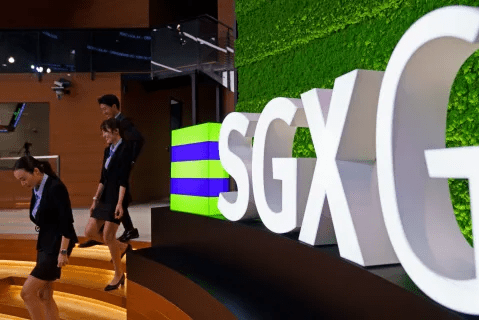
SGX-NASDAQ Dual Listing Bridge Aims to Revive Singapore’s Stock Market
Singapore is moving to revive its underperforming equities market through the SGX-NASDAQ dual listing bridge, a first-of-its-kind partnership allowing firms to list in both Singapore and the United States. The initiative, set to commence later this year, is designed to make cross-border listings more efficient while positioning Singapore as a more competitive capital-raising venue in Asia.
The SGX-NASDAQ dual listing bridge is part of a broader effort to address structural weaknesses in Singapore’s stock exchange, which has struggled to attract large initial public offerings compared with regional peers such as Hong Kong. By connecting to the U.S. market, Singapore aims to combine local brand recognition in Southeast Asia with access to deeper pools of global capital.
Why the SGX-NASDAQ dual listing bridge matters for issuers
The SGX-NASDAQ dual listing bridge is expected to appeal primarily to Southeast Asian companies seeking U.S. capital exposure while maintaining a presence in their home region. According to market participants cited in the article, firms can tap the depth of U.S. capital markets while still benefiting from recognition among Southeast Asian investors.
At the same time, the bridge may attract U.S. companies interested in extending trading beyond U.S. market hours and strengthening their footprint in Southeast Asia. This dual benefit reflects a strategic attempt to position Singapore as a conduit rather than a competitor to larger global exchanges.
From an investment perspective, the arrangement also expands diversification options for Asian investors amid geopolitical uncertainty. By enabling easier access to companies listed across both markets, the SGX-NASDAQ dual listing bridge broadens the available universe without requiring investors to navigate entirely separate listing regimes.
Liquidity challenges behind Singapore’s market revival push
Singapore’s stock exchange has long faced low liquidity relative to other major Asian bourses. Average daily turnover on the SGX stands at about $1.4 billion, far below the $29 billion recorded by Hong Kong’s exchange. Analysts attribute this gap to differences in investor behavior and market structure.
Hong Kong benefits from a large and active retail trading population, higher volumes, and sustained participation from high-frequency traders. This liquidity cycle supports stronger valuations and attracts more IPOs. In contrast, Singapore’s retail investor base is smaller and more conservative, with a preference for dividends and bonds.
The SGX-NASDAQ dual listing bridge seeks to counterbalance these dynamics by linking Singapore to deeper international liquidity, rather than relying solely on domestic trading activity to drive market growth.
How U.S. market depth shapes Southeast Asian listing decisions
The appeal of U.S. exchanges has already influenced listing choices across Southeast Asia. Several high-profile regional companies have opted to list in the United States rather than at home, drawn by larger capital pools and global investor reach. More recently, a major Filipino food conglomerate announced plans to list its international business in the U.S. by 2027.
These trends underscore why the SGX-NASDAQ dual listing bridge is strategically significant. Instead of losing potential listings entirely to overseas markets, Singapore is attempting to integrate itself into the global listing ecosystem. This approach reflects a recognition that competitiveness increasingly depends on connectivity, not isolation.
Singapore has shown signs of progress. In 2025, IPO proceeds on the SGX reached their highest level since 2019, leading Southeast Asia’s IPO market. Trading turnover in December also rose sharply year on year. Still, deal sizes remain modest compared with Hong Kong, where individual listings have raised several billion dollars.
Limits of the SGX-NASDAQ dual listing bridge model
Despite its potential, the SGX-NASDAQ dual listing bridge is not positioned as a comprehensive solution. Market observers caution that local liquidity constraints will persist unless U.S. investors actively trade during Singapore market hours.
Eligibility thresholds also narrow the bridge’s immediate impact. Only companies with a market capitalization above 2 billion Singapore dollars qualify, excluding many mid-sized Southeast Asian firms. By comparison, Hong Kong’s requirements for secondary listings are significantly lower, allowing a broader range of companies to participate.
As a result, the SGX-NASDAQ dual listing bridge may initially benefit a relatively small group of large firms rather than transforming the market overnight.
Strategic implications for capital markets and advisory services
The introduction of the SGX-NASDAQ dual listing bridge highlights how exchanges are rethinking competitiveness in a fragmented global environment. For companies, navigating such cross-border structures requires careful evaluation of listing criteria, investor access, and liquidity dynamics.
In this context, advisory and enablement services play a critical role. Many businesses require structured guidance to assess whether mechanisms like the SGX-NASDAQ dual listing bridge align with their growth and capital strategies. Explore the services of Uttkrist. Our services are global in nature and highly enabling for businesses of all types. Drop an inquiry in your suitable category at https://uttkrist.com/explore/.
As capital markets become more interconnected, strategic clarity will matter as much as regulatory access.
What will ultimately determine whether the SGX-NASDAQ dual listing bridge becomes a meaningful catalyst for Singapore’s market revival rather than a limited structural experiment?
Explore Business Solutions from Uttkrist and our Partners’, https://uttkrist.com/explore/
Also explore language-technology innovation at https://qlango.com/