
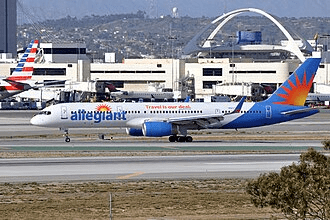
Allegiant Air to acquire Sun Country Airlines for $1.5 billion signals consolidation in U.S. leisure aviation
The announcement that Allegiant Air to acquire Sun Country Airlines for $1.5 billion marks a decisive moment for the U.S. leisure travel segment. The deal, structured as a cash-and-stock transaction that includes debt, brings together two low-cost carriers with overlapping strategic priorities but distinct route strengths. As stated by both companies, the intent is not disruption but scale, efficiency, and broader access to affordable leisure travel.
From an industry lens, this transaction reflects a clear pattern. Airlines focused on discretionary travel are prioritizing network fit over aggressive expansion. Allegiant and Sun Country positioned the deal as complementary rather than competitive, a framing that matters as regulators and shareholders review the proposal. Importantly, the companies emphasized continuity. For now, passengers can expect business as usual.
As consolidation narratives resurface across aviation, this deal stands out for its clarity of purpose and operational logic. It is less about cost-cutting headlines and more about building a larger, more resilient leisure-focused platform.
Why the Allegiant and Sun Country deal centers on network complementarity
Executives from both airlines highlighted that their route networks align rather than overlap. According to information shared with investors, the combined airline will serve roughly 175 cities through more than 650 routes. The fleet will include approximately 195 aircraft. These numbers are not presented as ambitions but as immediate post-merger realities.
This scale matters. Leisure travel demand tends to be seasonal and price-sensitive. A broader network allows flexible capacity deployment, which both airlines already describe as core to their operating models. The leadership commentary reinforces this point. Allegiant’s CEO Gregory Anderson noted confidence in the combined organization because both companies have demonstrated profitability within similar leisure-focused frameworks.
The strategic message is straightforward. By merging networks, the airline can smooth demand volatility while expanding affordable options. That framing positions the deal as additive, not extractive, which will be critical as regulatory scrutiny unfolds.
What travelers should expect as Allegiant Air acquires Sun Country Airlines
For customers, the near-term message is deliberately conservative. The airlines stated that there will be no immediate changes to ticketing, schedules, or the overall travel experience. Travelers can continue booking and flying with either carrier as they do today. The Sun Country brand will also remain intact for now.
Operationally, the merged airline will operate under the Allegiant name and be headquartered in Las Vegas. At the same time, it will maintain a significant presence in the Minneapolis–St. Paul area, where Sun Country is based. The companies also confirmed continued operation of Sun Country’s charter and cargo businesses.
Leadership continuity further supports this steady-state approach. Anderson will lead the combined airline as CEO, while Sun Country CEO Jude Bricker will join the board. Bricker’s prior experience as Allegiant’s chief operating officer adds institutional familiarity, reducing integration risk.
Regulatory approval and timing of the $1.5 billion airline acquisition
Despite the strategic confidence expressed, the transaction is not yet final. The deal still requires approval from regulators and Sun Country shareholders. The companies indicated that closure is expected in the second half of 2026.
This timeline signals patience rather than urgency. In the current regulatory environment, airline mergers face detailed review, particularly around competition and consumer impact. By emphasizing minimal immediate change and continued brand presence, the companies appear to be proactively addressing likely areas of concern.
For investors and industry observers, the extended runway provides a clearer window to assess integration planning and execution discipline. The absence of aggressive synergy claims suggests a measured approach, which may resonate with stakeholders seeking stability over spectacle.
Strategic context for businesses watching airline consolidation
The development that Allegiant Air to acquire Sun Country Airlines for $1.5 billion is not just an aviation story. It offers broader lessons for businesses navigating consolidation. The emphasis on complementary assets, leadership continuity, and customer reassurance reflects a playbook increasingly favored in mature industries.
Organizations assessing similar moves can draw practical insight from this approach. Scale is positioned as an enabler, not an end goal. Integration is framed as evolutionary, not revolutionary. These choices shape stakeholder perception long before operational results materialize.
For companies seeking structured, global advisory support around growth, integration, or strategic realignment, it is worth exploring how enabling partners operate across industries and markets. Explore the services of Uttkrist. Our services are global in nature and highly enabling for businesses of all types. Drop an inquiry in your suitable category: https://uttkrist.com/explore/
As consolidation accelerates across sectors, the discipline shown in this transaction may become a reference point rather than an exception.
What does this deal suggest about the future balance between scale and specialization in consumer-driven industries?
Explore Business Solutions from Uttkrist and our Partners’, https://uttkrist.com/explore
https://qlango.com/