
Amazon Alexa ambient intelligence signals the end of doom scrolling
Amazon’s devices chief says younger users want AI that disappears into daily life, not more apps or screens.
The smartphone era is showing signs of fatigue
Amazon Alexa ambient intelligence is emerging as a response to growing frustration with constant screen use.
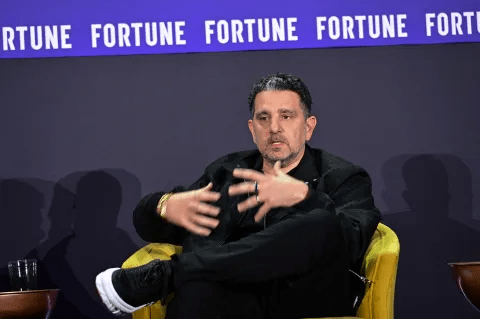
At a recent AI-focused industry event in San Francisco, Panos Panay, Senior Vice President of Devices and Services at Amazon, described a cultural shift underway.
According to Panay, younger users feel trapped by endless social media scrolling.
As a result, they are demanding technology that removes friction instead of adding it.
This generation has grown up surrounded by AI.
Naturally, their expectations differ from those shaped by apps and touchscreens.
Rather than chasing better interfaces, Amazon is betting on making technology fade into the background.
The goal is simple: outcomes without effort.
Why Amazon believes apps are losing relevance
Panay framed Amazon Alexa ambient intelligence as a break from the traditional “open, tap, search” loop.
In his view, the future experience does not require a screen at all.
He described interactions where users ask a question and receive an answer instantly.
There is no phone unlock.
There is no app navigation.
There is no cognitive overhead.
He shared a personal example involving a family discussion about choosing a restaurant.
Instead of each person scrolling independently, they asked Alexa.
The assistant recalled a conversation from months earlier and resolved the debate.
That moment, Panay explained, reflects what ambient intelligence looks like when it works.
Technology supports human connection instead of interrupting it.
Hardware experimentation beyond today’s devices
To enable Amazon Alexa ambient intelligence, Amazon is actively exploring new hardware paths.
Panay avoided discussing specific product roadmaps.
However, he made it clear that current smart speakers and phones are not the final form.
He stated that the next AI device category has not yet appeared.
Amazon, he said, maintains a lab full of experimental ideas.
Most will never reach consumers.
When asked about competition from new AI wearables and glasses, Panay referenced Amazon’s existing portfolio.
That includes earbuds, wearables, and past experiments with smart glasses.
He also pointed to a recent acquisition involving wristband technology.
The consistent theme, he emphasized, is presence.
Amazon wants its assistant available wherever the user goes.
Security as a non-negotiable design principle
As listening devices become more embedded in daily life, concerns naturally follow.
Panay addressed those concerns directly.
He described security as a binding contract with customers.
If that contract breaks, trust disappears.
According to Panay, Amazon does not compromise on security standards at any stage.
Security, he said, sits at the foundation of product design.
It is not a feature added later.
It is the first requirement.
This stance underpins Amazon’s broader push toward ambient systems that operate continuously in the background.
Alexa Plus as the bridge to ambient intelligence
The clearest expression of Amazon Alexa ambient intelligence today is the new Alexa Plus.
Panay positioned it as a shift away from command-based interactions.
Unlike earlier versions, Alexa Plus acts as a “home manager” and “butler.”
It relies on contextual memory rather than rigid commands.
It adapts based on previous conversations.
If a user asks related questions over time, the system adjusts its responses.
Its understanding deepens.
Its personality shifts.
Panay described this as a move toward unlimited depth of understanding.
The objective is not novelty.
The objective is saving time.
From doom scrolling to intentional living
For Panay, the implications extend beyond devices.
He framed the decline of doom scrolling as a cultural shift.
By reducing screen dependence, ambient systems return time to users.
That time can flow into learning, reading, and more meaningful activities.
In his view, reading remains one of the highest forms of human engagement.
Moving away from endless feeds supports that value.
Amazon Alexa ambient intelligence therefore represents more than a product direction.
It reflects a rethinking of how technology fits into human life.
Strategic implications for businesses
For organizations watching this shift, the message is blunt.
Users want fewer interfaces, not more.
They expect AI to work quietly and contextually.
This trend pressures businesses to rethink customer interaction models.
Frictionless outcomes now matter more than feature density.
To explore how such shifts affect operations, customer engagement, and AI adoption, you can Explore the services of Uttkrist, our services are global in nature and highly enabling for businesses of all types, drop us an inquiry in your suitable category: https://uttkrist.com/explore.
Closing perspective
If ambient intelligence replaces apps and screens, how should businesses redesign experiences for users who no longer want to look at technology at all?
Explore Business Solutions from Uttkrist and our Partners’, Pipedrive CRM [2X the usual trial with no CC and no commitments] and more uttkrist.com/explore