
Arya.ag profitability attracts investors despite falling crop prices
The Arya.ag profitability story stands out at a time when global agricultural commodity prices continue to fall. Even as volatility pressures farmers and agribusinesses worldwide, the Indian agritech company has remained profitable while attracting fresh investor interest. Arya.ag recently closed an $81 million all-equity Series D round led by GEF Capital Partners, reinforcing confidence in its business model amid a challenging market environment.
Global crop prices are under pressure from extreme weather risks, rising input costs, trade disruptions, and policy shifts. Against this backdrop, Arya.ag says it has avoided direct exposure to commodity price swings by operating a secured, asset-backed model that absorbs pricing shocks rather than amplifying them.
Arya.ag profitability driven by storage-led agritech model
Founded in 2013 by former ICICI Bank executives Prasanna Rao, Anand Chandra, and Chattanathan Devarajan, Arya.ag focuses on giving farmers greater control over crop sales. The company provides storage facilities near farms, enables lending against stored grain, and connects farmers with a broader buyer network.
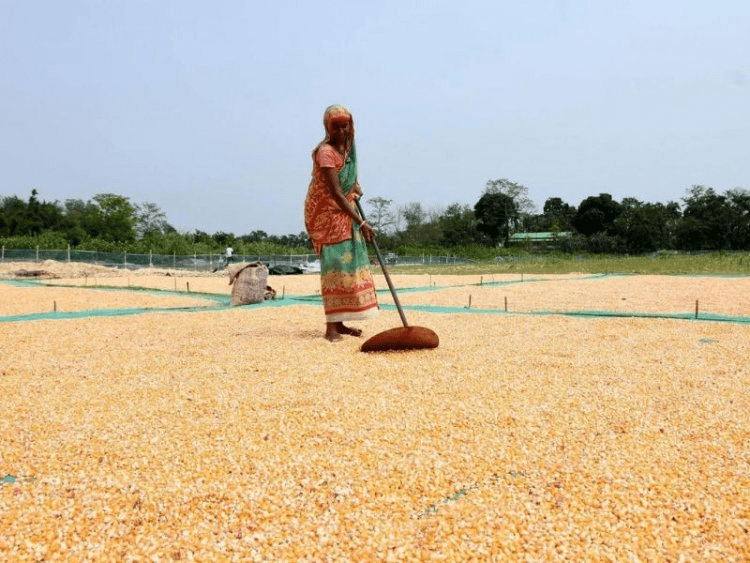
This approach allows farmers to avoid selling immediately after harvest, when prices are often weakest. Instead, they can store crops, access liquidity, and sell when market conditions improve. Arya.ag profitability benefits from this structure, as the company earns revenue from storage, financing, and facilitating crop sales.
Scale and risk control support Arya.ag profitability
Arya.ag operates at a scale that differentiates it from traditional lenders and agribusiness platforms. The company aggregates and stores about $3 billion worth of grain annually, representing roughly 3% of India’s national output. It also facilitates around $1.5 billion in loans each year.
Despite falling prices, Arya.ag reports gross non-performing assets below 0.5%. The company lends only a portion of the grain’s value and tracks prices closely, triggering margin calls when required. Borrowers can either repay part of the loan or add more grain as collateral. This secured lending approach helps protect the company from inventory losses and sharp market declines.
Prasanna Rao has emphasized that while risks remain, the lending model’s built-in margins and mark-to-market discipline help control defaults.
Financial performance remains strong amid volatility
In the year ended March 2025, Arya.ag generated net revenue of ₹4.5 billion, or about $50 million. During the first half of the current financial year, revenue rose around 30% year over year to ₹3 billion. Profit after tax reached ₹340 million last year and has increased a further 39% so far this year, according to Rao.
Storage services contribute roughly 50–55% of total revenue, while finance accounts for 25–30%, with the remainder coming from commerce. This diversified revenue mix supports Arya.ag profitability even when commodity markets weaken.
Lending access and technology adoption
Arya.ag now reaches between 850,000 and 900,000 farmers across about 60% of India’s districts. It operates through a network of approximately 12,000 leased warehouses. The platform disburses more than ₹110 billion in loans annually, with a portion funded through its own non-banking finance arm and the rest originated for partner banks.
Loan approval takes under five minutes, with disbursements handled almost entirely digitally. Interest rates range from about 12.5% to 12.8%, lower than those charged by commission agents, though slightly higher than typical bank rates. Banks often avoid the small, local markets Arya.ag serves, where loan sizes are smaller and borrowers are distant from formal branches.
Technology underpins the company’s risk management. Arya.ag uses AI to assess grain quality, satellite data to track crop stress before harvest, and sensor-enabled storage bags that allow grain to be stored safely even in villages without formal warehouses.
Growth plans and IPO readiness
The fresh capital will be used to expand technology deployments, scale smart farm centers, and strengthen digital tools closer to farms. Arya.ag also plans to invest further in its blockchain-based system that tracks stored grain across lending and trade transactions.
With improving profitability and new funding, the company aims to be IPO-ready within the next 18 to 20 months. Beyond India, Arya.ag plans selective international expansion through a software-led model, with technology already deployed in parts of Southeast Asia and Africa. The company employs more than 1,200 full-time staff.
As agritech platforms balance risk, scale, and farmer access in volatile markets, structured evaluation becomes essential for stakeholders. Insights and advisory platforms such as https://uttkrist.com/explore/ help businesses assess how data-driven, asset-backed models can sustain profitability under market stress.
Can models like Arya.ag profitability-driven approach reshape how agricultural finance and storage operate during prolonged commodity downturns?
Explore Business Solutions from Uttkrist and our Partners’, https://uttkrist.com/explore