
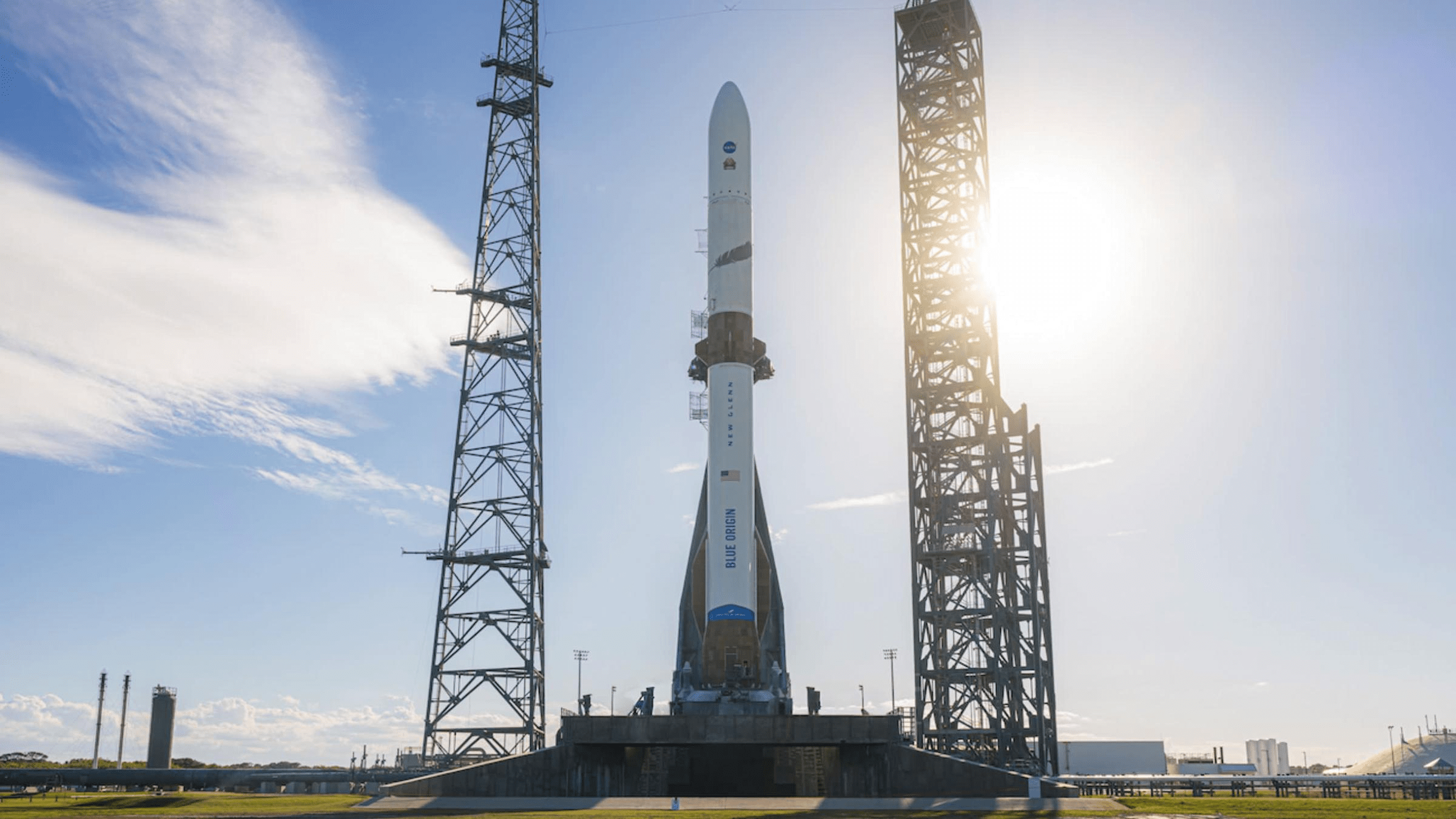
Blue Origin New Glenn launch schedule signals shift in near-term mission priorities
Blue Origin has scheduled the third launch of its New Glenn rocket for late February. However, the mission will not target the moon, despite earlier indications. Instead, the rocket will carry a commercial satellite payload for AST SpaceMobile into low-Earth orbit.
This New Glenn launch marks the second time Blue Origin has flown a commercial payload on the vehicle. The decision represents a notable operational choice, especially as the company continues transitioning New Glenn from development into routine orbital service.
From a strategic standpoint, the move underscores a focus on demonstrated reliability and commercial delivery. For enterprises tracking launch cadence and execution discipline, this shift offers insight into how Blue Origin is prioritizing near-term orbital commitments.
As space programs mature, execution often matters more than ambition. That reality is becoming clearer with each New Glenn flight.
Commercial payload replaces lunar mission in New Glenn launch plan
Blue Origin did not provide an immediate explanation for replacing its planned lunar mission. The company had previously suggested that New Glenn could carry its own robotic lunar lander.
That lander, known as Blue Moon Mark 1, is currently being shipped to NASA’s Johnson Space Center in Texas. There, it will undergo vacuum chamber testing. Importantly, no launch date has been set for the lunar mission.
This adjustment suggests sequencing rather than retreat. The lunar lander program is still active, but not yet launch-ready. In contrast, the AST SpaceMobile satellite is prepared for deployment.
For stakeholders, this highlights how launch providers balance internal programs with external customer obligations. Commercial readiness often drives scheduling decisions, especially for vehicles entering operational phases.
Organizations evaluating space infrastructure partners can draw lessons from how timelines are managed under real-world constraints.
New Glenn launch cadence accelerates after long development cycle
This upcoming mission will be the third New Glenn launch in just over a year. That pace contrasts sharply with the rocket’s decade-long development period.
Such acceleration indicates that Blue Origin is moving decisively into a testing-and-iteration phase. Each launch provides operational data that cannot be replicated on the ground.
Notably, the booster stage from the second New Glenn mission will be reused. That booster was recovered last November after landing on an ocean-based drone ship.
This approach mirrors established industry practices around booster reuse. It also signals a focus on cost efficiency and operational sustainability as launch frequency increases.
For decision-makers watching capital-intensive programs, this transition from development to reuse is a critical inflection point.
Busy February launch window intensifies competitive landscape
The late-February New Glenn launch falls within a crowded spaceflight schedule. NASA may launch its Artemis II mission as early as February 6. That mission would send four astronauts to orbit the moon.
At the same time, SpaceX is expected to begin testing the third version of its Starship rocket. NASA and SpaceX are also planning the Crew-12 mission to restore full staffing to the International Space Station.
Against this backdrop, the New Glenn launch competes for attention and operational resources. Yet it also reinforces how active and compressed the launch calendar has become.
For commercial and institutional players alike, timing now intersects directly with visibility, partnerships, and strategic signaling.
New Glenn anchors broader ambitions beyond Earth orbit
New Glenn is Blue Origin’s first vehicle designed for regular orbital delivery. It builds on the company’s earlier suborbital New Shepard program, which has operated for more than a decade.
Beyond this mission, Blue Origin has signed an agreement with AST SpaceMobile to launch multiple satellites. These satellites will support a space-based cellular broadband network.
The company’s ambitions extend further. In November, Blue Origin revealed plans for a super-heavy variant of New Glenn. That vehicle would exceed the height of Saturn V and rival other next-generation launch systems.
More recently, Blue Origin announced a satellite internet constellation called TeraWave. Deployment is planned to begin in late 2027.
For businesses assessing long-term space infrastructure, these developments illustrate a layered strategy that blends launch services, lunar systems, and satellite networks.
To explore how global organizations navigate complex technology transitions and execution trade-offs, readers may find value in the analytical frameworks and advisory services outlined at https://uttkrist.com/explore/. These services focus on enabling decision-making across industries facing scale, capital, and innovation challenges.
As space programs grow more interconnected with commercial ecosystems, what will matter more: launch ambition or consistent delivery?
Before closing, readers interested in adjacent digital infrastructure platforms may also review https://qlango.com/ for additional perspective.
Explore Business Solutions from Uttkrist and our Partners’, https://uttkrist.com/explore