
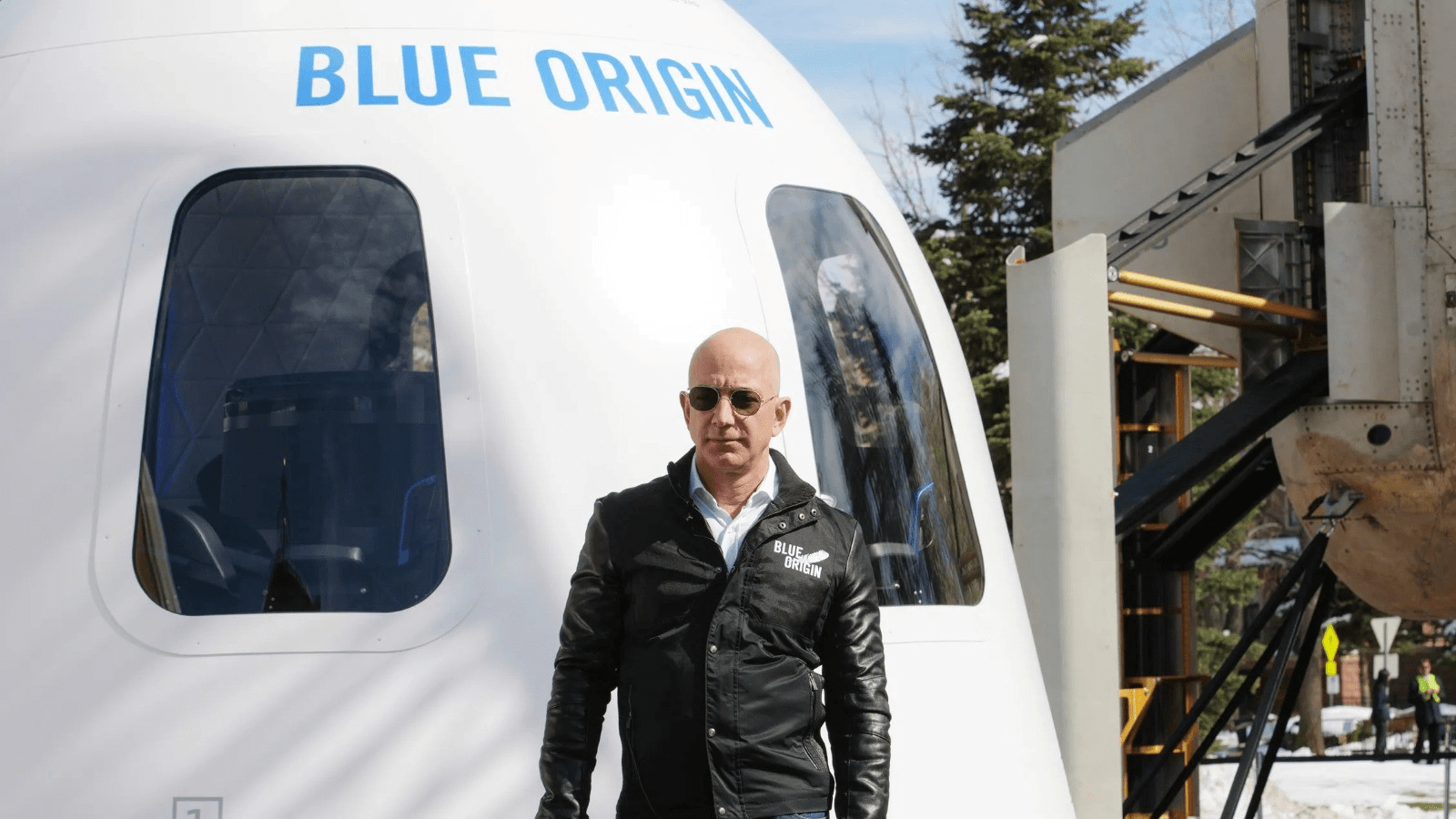
Blue Origin Pauses Space Tourism Flights to Focus on Moon Missions
Blue Origin pauses space tourism flights as it redirects resources toward upcoming moon missions. The company confirmed the pause will last no less than two years. This strategic shift marks a clear change in operational priorities after five years of commercial space tourism activity.
The decision temporarily halts human flights beyond the Kármán line. These missions had become a defining feature of Blue Origin’s recent operations. However, leadership stated the move aligns with national objectives centered on returning humans to the moon and sustaining a long-term lunar presence.
As Blue Origin pauses space tourism flights, its focus now centers on lunar readiness. This includes aligning launch schedules, testing spacecraft, and preparing infrastructure for moon missions. The announcement comes shortly before the expected third launch of the New Glenn rocket, planned for late February.
Strategic Realignment Toward Lunar Missions
Blue Origin pauses space tourism flights to commit fully to lunar exploration. According to the company, all available resources will support upcoming moon missions. This decision reflects alignment with national goals to return astronauts to the lunar surface and establish sustained operations there.
The timing is notable. The pause was announced weeks before the anticipated third New Glenn launch. Earlier indications suggested this launch could carry a robotic lunar lander. However, that spacecraft remains under testing at NASA’s Johnson Space Center in Texas.
This shift also follows renewed pressure on NASA to accelerate lunar timelines. That environment has created space for companies beyond SpaceX to compete for moon-related missions. Consequently, Blue Origin’s decision positions it within a broader competitive landscape for lunar contracts.
New Glenn and Operational Readiness
The New Glenn rocket represents a central element in this transition. While Blue Origin pauses space tourism flights, attention turns to heavy-lift capabilities and mission reliability. The third New Glenn launch is expected in late February, although payload details remain tied to ongoing testing.
Meanwhile, the New Shepard program enters another pause. Unlike orbital rockets, New Shepard was designed for suborbital missions. Its primary use involved carrying passengers and research payloads past the recognized boundary of space. This limitation shaped its role within the company’s portfolio.
Despite that, New Shepard achieved significant milestones. It flew 38 times, carried 98 humans to space, and transported more than 200 scientific payloads. These achievements underscore the scale of activity now being paused in favor of lunar objectives.
Learning From Past Pauses and Program History
This is not the first interruption for New Shepard. The program was grounded in 2022 after a booster exploded mid-flight. Although no humans were aboard and the capsule safely separated, the incident led to an extended pause. Flights resumed in late 2023 after identifying and correcting the cause.
As Blue Origin pauses space tourism flights again, the context differs. This pause is strategic rather than reactive. It signals a shift from commercial suborbital flights to national and exploratory missions with longer timelines and higher complexity.
For businesses and stakeholders tracking aerospace strategy, this move highlights how priorities can pivot quickly. It also reflects how operational focus follows national objectives and competitive pressures.
Executives analyzing similar transitions can explore how strategic realignment affects resource allocation and long-term positioning. Explore the services of Uttkrist. Our services are global in nature and highly enabling for businesses of all types. Drop an inquiry in your suitable category: https://uttkrist.com/explore/
What does this pause suggest about the future balance between commercial space tourism and government-backed exploration programs?
Explore Business Solutions from Uttkrist and our Partners’, https://uttkrist.com/explore