
China buys two-thirds of pledged US soybeans as 2025 closes, reshaping trade expectations
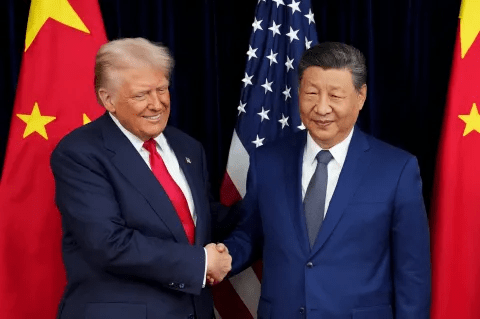
As 2025 ends, the focus keyphrase China buys two-thirds of pledged US soybeans dominates trade discussions. China has purchased at least 8 million tons of US soybeans this year, according to people familiar with the matter. The volume places the world’s top importer on course to meet a pledge announced after talks between President Donald Trump and President Xi Jinping.
However, although Washington stated that China pledged to buy 12 million tons by year-end, US officials later clarified that the deadline extends to the end of February. Beijing has not formally confirmed the commitment. Nevertheless, China has reduced tariffs on US soybeans and lifted import bans on three American exporters, signaling partial policy alignment with the stated objectives.
China buys two-thirds of pledged US soybeans as exporters regain cautious confidence
The steady flow of purchases began in October and continued through late December, reassuring American exporters who had remained uncertain amid limited visibility and unclear deadlines. Most shipments booked so far are scheduled for loading between December and March, reflecting sustained near-term demand.
Yet, this shift does not represent a full reset. Even while acquiring US supplies, Chinese state-owned firms simultaneously purchased large volumes from Brazil and Argentina. In contrast, commercial buyers have largely stayed on the sidelines for US cargoes. Consequently, although Chinese participation has strengthened sentiment, structural caution remains embedded in the market.
Global competition intensifies as China balances US and South American supply
In parallel, Brazil’s role has expanded sharply. Almost 80% of Brazil’s soy exports went to China in 2025. Through November, exports climbed 16% year over year, and shipments continued into December despite seasonal weakness. Brazil’s upcoming harvest is forecast to be a record, reinforcing its competitive positioning.
Meanwhile, analysts suggest China could reach a soft target of 10 million tons in 2025, with another 2 million tons in January. Without a formally confirmed bilateral agreement, uncertainty continues to dominate forward sales planning.
Market pressure builds despite China buys two-thirds of pledged US soybeans
Despite the buying momentum, soybean prices remain under strain. Traders cite unresolved policy ambiguity as a central factor. Chicago soybean futures eased in the final session of the year and were on track to fall about 7% in December, marking the worst monthly performance since July 2024.
From the farm level, expectations are mixed. Illinois farmer Matt Bennett noted that growers have been “pleasantly surprised” by the steady flow of purchases. However, he emphasized that confidence requires volumes exceeding the stated 12 million ton commitment to materially shift sentiment.
Policy uncertainty lingers as farmers await relief clarity
Earlier this month, President Trump announced $12 billion in relief for US farmers. Nevertheless, details on payment allocation remain pending, with February identified as the timeline for clarity. Therefore, while trade activity provides short-term reassurance, longer-term stability remains unresolved.
In this evolving environment, global agribusiness leaders increasingly require structured market intelligence, supply-chain optimization, and policy risk advisory. Explore the services of Uttkrist. Our services are global in nature and highly enabling for businesses of all types. Drop an inquiry in your suitable category:
https://uttkrist.com/explore/
As 2026 approaches, the trajectory of global soybean trade will hinge not merely on volumes booked, but on whether confidence can outpace policy ambiguity.
Will sustained trade flows ultimately translate into lasting stability for global agriculture markets?
Explore Business Solutions from Uttkrist and our Partners’, https://uttkrist.com/explore/