Exxon Venezuela investment standoff: Why Trump’s pressure meets oil industry reality
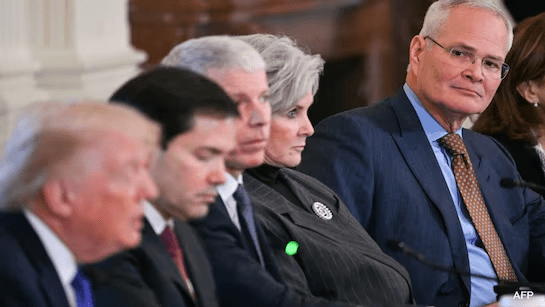
The Exxon Venezuela investment standoff exposes a sharp disconnect between political urgency and capital discipline. During a White House meeting, Exxon Mobil CEO Darren Woods stated the Venezuelan oil industry is currently “uninvestable.” He emphasized that major reforms are required before committing billions of dollars. While other executives offered praise, Woods’ assessment cut through optimism and reframed the discussion around risk, durability, and returns.
Two days later, President Donald Trump responded publicly. He said he would “probably be inclined to keep Exxon out” of Venezuela, calling the company’s stance “too cute.” The exchange underscored a core tension: political timelines versus multidecade investment horizons. For executives and investors, this moment clarifies how governance, legal certainty, and economics still dictate capital flows—regardless of geopolitical momentum.
Political pressure versus capital discipline in Venezuela oil
The administration wants U.S. oil companies to invest more than $100 billion in Venezuela, and to do so quickly. Trump’s objective is clear. More oil could help lower fuel prices, which matters ahead of midterm elections. However, industry leaders do not share the urgency.
Woods explained that Exxon would send a technical team to Venezuela within two weeks to assess conditions. Yet he was explicit that financial commitments would take far longer. He highlighted unanswered questions around protections, commercial terms, and legal frameworks. These factors determine returns over decades, not election cycles.
Analysts noted that Exxon’s restraint likely protected shareholders. Overcommitting in a high-risk environment could have triggered market backlash. As one observer put it, there is no urgency from the industry to return, and little inducement without guaranteed profitability.
Exxon Venezuela investment standoff and legacy risk
The Exxon Venezuela investment standoff is rooted in history. Exxon and ConocoPhillips had assets expropriated in 2007, costing billions. Trump has repeatedly cited those expropriations, calling them the largest theft in American history. He also used them as justification for the Jan. 3 military operation that led to the arrest of Nicolás Maduro.
Despite Venezuela holding the world’s largest proven oil reserves, output has collapsed to one-third of early-2000s levels. Mismanagement, labor strikes, and U.S. sanctions have taken a heavy toll. Rebuilding would require massive upfront spending before any return to profitability becomes realistic.
Industry experts estimate that even doubling production would take years and around $110 billion. Returning to historical levels would take over a decade and far more capital. For companies with global options, Venezuela ranks low on the list.
Economics over enthusiasm in global oil investment
Executives weigh opportunity cost relentlessly. Exxon has successfully invested offshore Guyana and has alternatives in Brazil and the U.S. Permian Basin. Compared with those options, Venezuela’s extra-heavy crude presents additional challenges.
The oil requires diluent to flow, meaning companies must bring in lighter oil to extract heavier crude. Infrastructure needs rebuilding long before profits appear. As one analyst bluntly described it, the material is closer to sludge than easy barrels.
From this perspective, the Exxon Venezuela investment standoff reflects rational capital allocation. Woods could have softened his language, but his position aligned with economic reality. Even critics acknowledged that sugarcoating would not change fundamentals.
For organizations navigating geopolitical complexity, advisory support matters. Many leaders now reassess cross-border exposure, governance risk, and long-term returns. In that context, executives often explore structured guidance through platforms like https://uttkrist.com/explore/ to evaluate complex investment environments with clarity and discipline.
Control without dependence: the strategic backdrop
Interestingly, analysts argue the U.S. does not need Venezuelan oil. The market is already awash in supply. Boosting Venezuelan production could even hurt U.S. producers. Still, control over oil revenues provides leverage.
By holding the purse strings, the U.S. can pressure the acting Venezuelan government to cooperate. Stability, not speed, appears to be the underlying strategy. Trump may be frustrated with Exxon’s caution, but the broader economic forces will assert themselves over time.
As capital, politics, and energy strategy collide, leaders must decide where realism ends and ambition begins. The Exxon Venezuela investment standoff is less about defiance and more about discipline. In volatile markets, that distinction matters.
How should global companies balance political expectations with fiduciary responsibility when strategic resources are at stake?
Explore Business Solutions from Uttkrist and our Partners’, https://uttkrist.com/explore
https://qlango.com/