Ford AI Assistant Signals a Strategic Shift in In-Car Intelligence and Autonomy
Ford AI assistant is becoming a central pillar of the company’s next software phase.
At CES 2026, Ford outlined a clear, staged roadmap.
The assistant launches first inside Ford’s smartphone app in early 2026.
It then expands into vehicles in 2027.
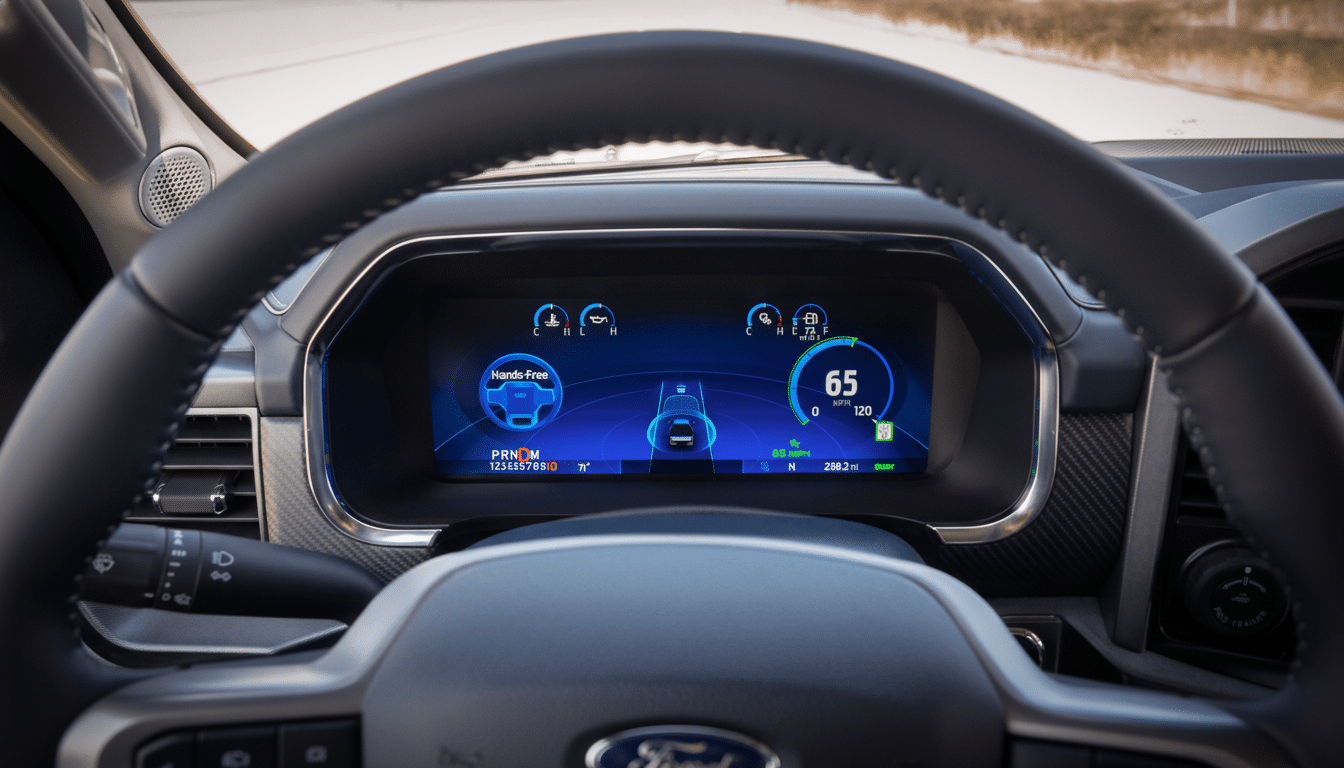
Alongside this, Ford previewed a next-generation BlueCruise system aimed at lower cost and higher capability.
This announcement matters because it reframes how Ford approaches human–vehicle interaction.
Rather than a single feature drop, Ford is sequencing intelligence, cost efficiency, and autonomy.
That sequence reflects disciplined execution, not show-floor hype.
As enterprises across sectors rethink digital interfaces, similar transformation patterns are visible through advisory ecosystems like https://uttkrist.com/explore/ that focus on scalable, global technology enablement.
Ford AI assistant architecture and deployment timeline
Ford AI assistant is hosted on Google Cloud and built using off-the-shelf large language models.
Crucially, Ford is giving the assistant deep access to vehicle-specific data.
This design choice defines the system’s value.
The assistant can answer high-level ownership questions.
It can also deliver granular, real-time vehicle information, such as oil life.
That dual capability positions it as a functional layer, not a novelty interface.
Ford confirmed the rollout will begin in the revamped Ford app in early 2026.
Native in-vehicle integration follows in 2027.
The company did not disclose which vehicle models will be prioritized.
This phased deployment mirrors enterprise-grade platform rollouts seen across industries.
Organizations that manage similar staged transformations often rely on structured solution frameworks, like those outlined through https://uttkrist.com/explore/, to balance innovation with operational continuity.
BlueCruise evolution and the economics of autonomy
Ford also teased a next-generation BlueCruise system during the same CES session.
According to the company, the new system is 30% cheaper to build than the current version.
Cost reduction here is strategic, not incremental.
The updated BlueCruise will debut in 2027.
It will appear first on an electric vehicle built on Ford’s low-cost Universal Electric Vehicle platform.
Ford expects this vehicle to be a mid-sized pickup.
Looking further ahead, Ford is promising eyes-off driving in 2028.
It also claims the system will handle point-to-point autonomy.
Drivers, however, must remain ready to take control at all times.
This balance between ambition and constraint reflects a mature autonomy narrative.
It aligns with how regulated, high-risk industries typically scale advanced systems.
Ford’s positioning within a changing automotive technology landscape
Ford’s CES presence was notable for another reason.
Major automakers once dominated the show in the late 2010s.
This year, Ford’s announcement stood out precisely because such moments are now rarer.
The company chose a discussion-based format instead of a keynote.
The session focused on the intersection of technology and humanity.
That context reinforces Ford’s intent to frame AI as an assistive layer, not a replacement for human control.
As digital systems increasingly define user experience, organizations across sectors face similar inflection points.
Strategic partners and advisory platforms such as https://uttkrist.com/explore/ exist to help enterprises navigate these shifts with clarity and governance.
For those also exploring language-led digital experiences in adjacent domains, platforms like https://qlango.com/ illustrate how conversational intelligence is being operationalized beyond vehicles.
What does Ford AI assistant ultimately reveal about how legacy manufacturers are redefining intelligence without surrendering control?
Explore Business Solutions from Uttkrist and our Partners’, https://uttkrist.com/explore