
Intelligence era tokens mark a shift beyond information age
Intelligence era tokens redefine how companies build AI value
The global technology landscape is moving past the information age. According to senior industry leaders, a new intelligence era has arrived. In this phase, businesses no longer compete on how much data they store or retrieve. Instead, they compete on how effectively they generate intelligence using AI.
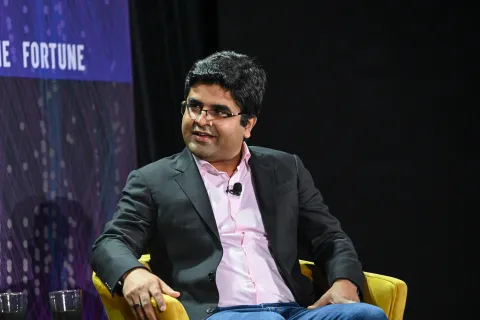
At a recent industry conference, Prakhar Mehrotra, senior vice president and global head of AI at PayPal, described this transition as fundamental. He stated that industries are shifting away from static data systems toward AI-driven generation of new information. The long-term objective is partial autonomy inside the workplace.
This transition places intelligence era tokens at the center of enterprise strategy.
From data retrieval to intelligence generation
The information era was built on access. Computers became smaller. Networks expanded. The web placed knowledge within reach. That era optimized storage and retrieval.
The intelligence era operates differently. AI models do not simply fetch stored content. They generate outputs dynamically. When users request code, presentations, or written material, models synthesize new content rather than pulling it from a database.
This capability changes how work gets done. It also changes how companies measure progress. Intelligence era tokens now act as the basic unit of both input and output in AI systems.
Mehrotra emphasized that organizations must reframe how they view data. When data is understood as tokens, intelligence can be extracted and scaled more effectively across workflows.
Why intelligence era tokens matter to enterprises
Tokens represent the smallest unit of language that AI systems process. They also represent what AI systems produce after receiving prompts. This dual role makes tokens a critical metric.
In practice, token generation has become a signal of AI activity and output. It is increasingly used by technology firms to demonstrate scale and momentum. For investors, tokens provide a visible indicator of model usage.
However, data cited during the discussion suggests caution. While token volumes highlight activity, their correlation with actual demand and profitability remains weaker than often implied. Enterprises therefore face decisions about how tokens should be sourced, generated, or purchased.
The intelligence era rewards companies that treat tokens as strategic assets rather than abstract technical details.
AI factories emerge as the operating model
Building intelligence at scale requires infrastructure. Marc Hamilton, vice president of solutions architecture and engineering at Nvidia, described the future as one driven by AI factories.
These AI factories may exist on-premises or in the cloud. Their role is consistent. They ingest tokens and produce tokens that carry operational or economic value.
Hamilton explained that AI-generated outputs differ fundamentally from traditional computing. The system does not retrieve content. It generates it using models trained on vast tokenized datasets.
This approach reframes enterprise infrastructure planning. Every company effectively operates its own AI factory, tuned to its data, objectives, and constraints.
Adoption remains uneven across organizations
Despite growing investment, enterprise AI adoption has delivered mixed outcomes. An August study from MIT found that 95% of enterprise AI workplace initiatives failed to achieve rapid revenue acceleration.
Mehrotra described AI adoption as incremental. Organizations must progress through crawl, walk, and run phases. This pattern has remained consistent across technology cycles.
What changes in the intelligence era is the mindset. Companies that encourage employees to think in terms of token generation and process creation begin to operate differently. Over time, this shift can reshape internal culture and decision-making.
To operationalize this shift, enterprises increasingly seek external enablement. Many turn to advisory and implementation partners to align AI strategy with business execution. Explore the services of Uttkrist, our services are global in nature and highly enabling for businesses of all types, drop us an inquiry in your suitable category: https://uttkrist.com/explore
What intelligence era tokens signal for the future of work
The intelligence era does not eliminate the need for data. It redefines its purpose. Data becomes raw material. Tokens become the unit of intelligence. AI factories become the engine.
Organizations that adapt early may gain structural advantages. Those that delay may struggle to translate AI investment into outcomes. The difference lies less in ambition and more in how clearly leaders understand tokens as the atomic unit of intelligence.
As enterprises rethink productivity, autonomy, and valuation in this new era, a critical question remains:
Are companies redesigning their operations around intelligence era tokens, or are they still optimizing for an information age that has already ended?
Explore Business Solutions from Uttkrist and our Partners’, Pipedrive CRM [2X the usual trial with no CC and no commitments] and more uttkrist.com/explore