
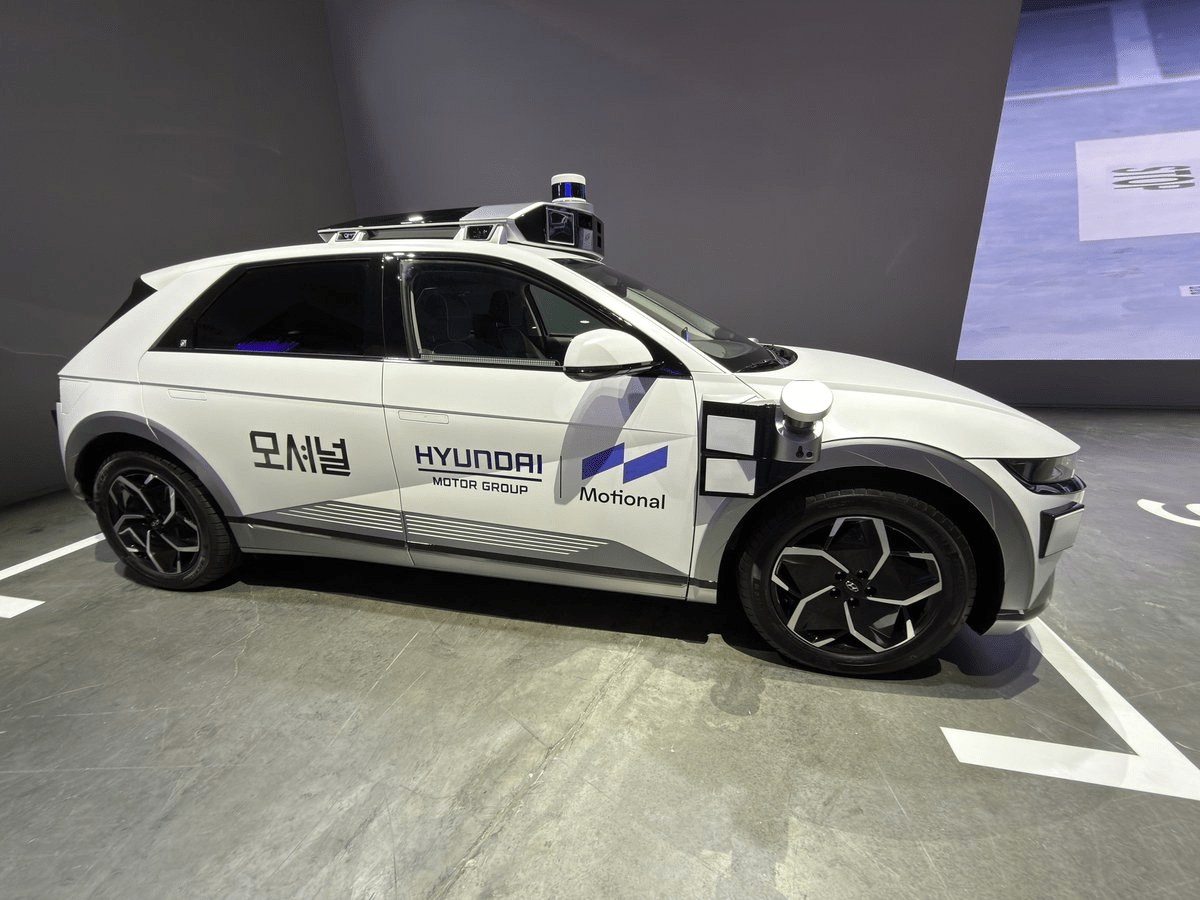
Motional Robotaxi Reboot Puts AI-First Strategy at the Center of Its 2026 Driverless Plan
Motional robotaxi reboot marks a hard reset for the autonomous vehicle company after years of pressure, missed targets, and internal restructuring. The company has rebuilt its self-driving roadmap around an AI-first architecture, with a clear goal to launch a commercial driverless robotaxi service in Las Vegas by the end of 2026.
This decision followed a period of strategic contraction. Motional paused its commercial ambitions to address rising complexity, cost challenges, and limits to scalability. Leadership described the move as slowing down in the short term to accelerate long-term viability. The reboot reflects urgency rather than experimentation.
The Motional robotaxi reboot signals a shift from survival mode to execution mode.
Motional’s autonomous vehicle reset after missed deadlines and restructuring
Nearly two years ago, Motional stood at a crossroads. The company had missed a planned driverless launch with a ride-hailing partner. Aptiv exited as a financial backer, forcing Hyundai Motor Group to inject an additional $1 billion to stabilize operations.
At the same time, Motional underwent deep workforce reductions. A 40% restructuring in May 2024 reduced headcount from about 1,400 employees to fewer than 600. These changes unfolded as rapid AI advancements began reshaping how autonomous driving systems were being built across the industry.
Faced with structural and technological gaps, Motional chose to pause commercial activity. The reset was framed as a necessary step to rebuild the foundation rather than continue incremental progress.
AI foundation models now anchor the Motional robotaxi reboot
The defining element of the Motional robotaxi reboot is architectural transformation. The company shifted away from a rules-heavy robotics stack toward an AI foundation model-based system.
Previously, Motional relied on multiple machine learning models to manage perception, tracking, and semantic reasoning. Other system functions were governed by rules-based software. Over time, this created a complex and difficult-to-maintain software web.
The new approach consolidates these capabilities into a single backbone model. Smaller models remain available for developers, but the system now operates end to end. This shift mirrors the broader application of transformer-based architectures from language systems into physical AI.
According to the company, the benefit lies in easier generalization across cities and environments, along with lower costs. New locations no longer require extensive reengineering. Instead, additional data collection and training enable safe operation in new contexts.
Las Vegas pilot shows measurable progress toward driverless service
Motional has already reopened robotaxi operations in Las Vegas with a human safety operator present. The service is currently limited to employees but is expected to expand to the public later this year through an unnamed ride-hailing partner.
By the end of the year, Motional plans to remove the human operator entirely. That milestone would mark the beginning of a commercial driverless service, ahead of the broader 2026 timeline.
During a recent autonomous drive, the vehicle navigated complex hotel pickup and drop-off zones. These environments were previously excluded from operations. While rider-facing interfaces remain under development, the vehicle completed the route without disengagement, indicating functional progress.
Robotaxis as the first step toward Level 4 autonomy in personal vehicles
Motional frames robotaxis as the first stop in a longer journey. Leadership described the broader ambition as bringing Level 4 autonomy into personal vehicles. In this model, robotaxi deployment provides real-world validation at scale before broader consumer integration.
Hyundai, now Motional’s majority owner, is positioned as a long-term partner in this roadmap. The Motional robotaxi reboot therefore aligns near-term commercial execution with longer-term automotive strategy.
For organizations confronting similar inflection points, this case illustrates the value of stepping back to rebuild core systems before scaling. Structural clarity often determines whether advanced technologies remain pilots or become platforms.
For leaders evaluating how AI-first architectures can enable scalable transformation, advisory ecosystems matter. Explore the services of Uttkrist. Our services are global in nature and highly enabling for businesses of all types. Drop an inquiry in your suitable category:
https://uttkrist.com/explore/
As AI continues to redefine autonomy and system design, how many legacy platforms will need a comparable reboot to remain competitive?
Explore Business Solutions from Uttkrist and our Partners’, https://uttkrist.com/explore
https://qlango.com/