Naware chemical-free weed killer technology challenges the lawn-care status quo
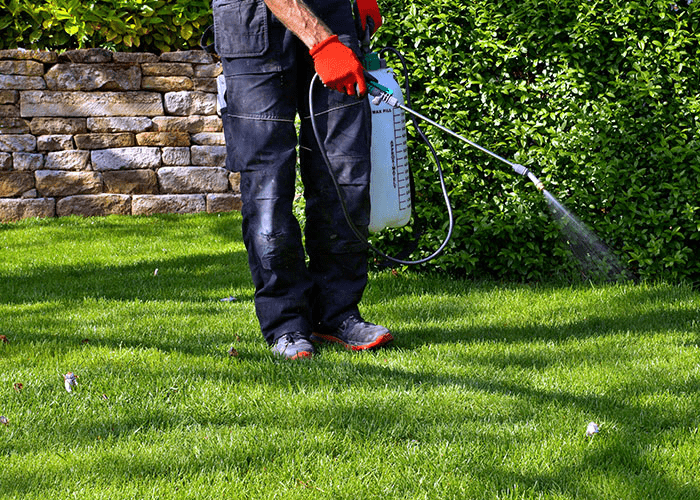
The Naware chemical-free weed killer technology is positioning itself as a practical alternative to chemical-heavy lawn care. Instead of herbicides, the system uses steam. Instead of guesswork, it relies on computer vision. The result is a hardware-first startup tackling an old industry problem with modern tools.
Founded by Naware, the company focuses on killing weeds using vaporized water. The system identifies weeds in real time and eliminates them without chemicals. This approach targets lawns, athletic fields, farms, and golf courses. Importantly, it addresses rising concerns around chemical exposure and operational costs.
The Naware chemical-free weed killer technology enters a market dominated by chemical spraying. It proposes a reset, not an incremental tweak.
From early experiments to a steam-based solution
The company’s founder, Mark Boysen, explored several approaches before landing on steam. Early trials included drones and high-powered lasers. However, fire risk made lasers impractical. Other ideas also failed during prototyping.
Steam emerged after repeated experimentation. Initial testing began with consumer-grade garment steamers. These tools were not industrial. Yet they proved the core idea worked. The challenge then shifted to making steam delivery effective, repeatable, and scalable.
That engineering process shaped the current system. Steam now delivers enough heat to kill weeds on contact. It does so without residue, runoff, or chemical storage.
Solving the “green-on-green” AI problem
Hardware was not the only hurdle. Weed identification proved harder. Lawns present a “green-on-green” visual challenge. Weeds blend into grass. Recognition must also happen in real time as equipment moves.
The system uses computer vision models trained to spot weeds instantly. Processing happens fast enough to support live operation on mowers, tractors, and ATVs. The setup relies on GPU acceleration, including hardware from Nvidia, to meet real-time demands.
This combination of AI detection and steam application defines the Naware chemical-free weed killer technology. It merges software precision with mechanical execution.
Economic implications for large-scale operators
The company is targeting professional operators first. These include athletic field managers and golf course operators. According to Boysen, customers in these segments could save between $100,000 and $250,000 on chemicals alone.
Additional savings come from labor reduction. Chemical spraying often requires dedicated staff. Steam-based systems reduce that dependency. The financial case rests on lower chemical purchases and simpler operations.
Naware has already conducted paid pilot programs. These pilots help refine performance while validating commercial demand. They also support early partnership discussions.
Partnerships, patents, and funding priorities
Growth depends on three factors. First, strategic partnerships with large equipment manufacturers. Discussions are underway with companies valued around $5 billion. Names remain undisclosed, but the intent is clear.
Second, patent protection matters. The technology must remain defensible as it scales. Third, funding will determine speed. The company is currently bootstrapped. An initial fundraising round is planned in the coming months.
This trajectory reflects a classic hardware startup path. Execution matters more than hype. Outcomes will depend on proof, not promises.
For organizations exploring operational innovation across sectors, platforms like Uttkrist help bridge strategy and execution. Explore the services of Uttkrist, our services are global in nature and highly enabling for businesses of all types, drop us an inquiry in your suitable category: https://uttkrist.com/explore
What this signals for lawn care and beyond
The Naware chemical-free weed killer technology shows how old industries can change through focused engineering. Steam replaces chemicals. Vision replaces blanket spraying. Cost savings replace regulatory risk.
If partnerships and funding align, this approach could redefine weed control standards. The question is not whether chemicals face pressure. It is how quickly alternatives like this can scale.
Will large operators move fast enough to adopt chemical-free systems before regulation forces their hand?
Explore Business Solutions from Uttkrist and our Partners’, Pipedrive CRM [2X the usual trial with no CC and no commitments] and more uttkrist.com/explore