
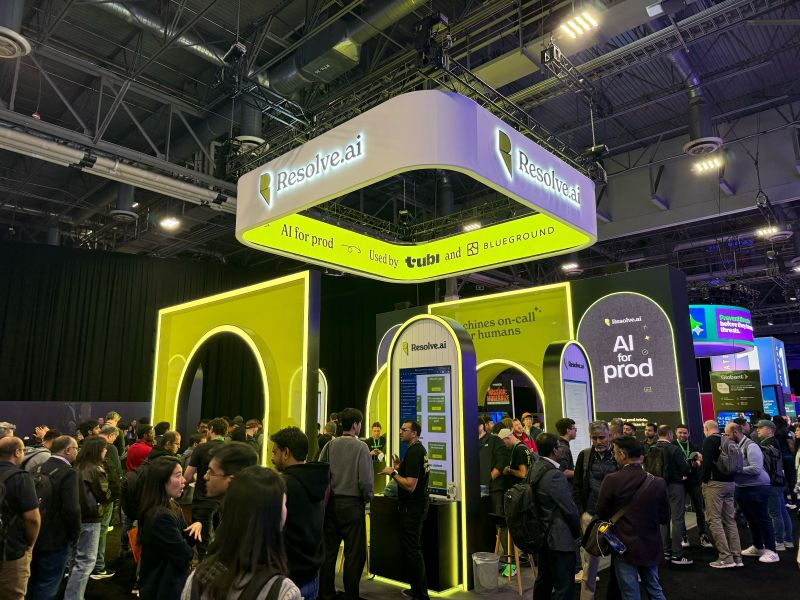
Resolve AI $1B Valuation Series A Signals a Shift in SRE Automation
A unicorn valuation for autonomous reliability engineering
The Resolve AI $1B valuation Series A marks a notable moment in enterprise AI funding. The startup, which builds an autonomous site reliability engineer, secured a Series A led by Lightspeed Venture Partners, according to people familiar with the deal.
While the headline valuation stands at $1 billion, the blended valuation is lower. The round used a multi-tranched structure. Some equity priced at the $1 billion mark, while a larger portion came at a lower valuation. This structure has become more common for highly sought-after AI startups.
Resolve AI and Lightspeed did not comment on the transaction.
Revenue scale and funding context
The Resolve AI $1B valuation Series A arrives while the company reports annual recurring revenue of roughly $4 million, according to two sources. The total size of the funding round remains undisclosed.
This gap between revenue and valuation underscores current investor interest in infrastructure-focused AI. In particular, it highlights demand for tools that directly address production reliability at scale. The structure of the round also reflects cautious optimism rather than unchecked exuberance.
Founders with deep observability roots
Founded less than two years ago, Resolve AI is led by former Splunk executives Spiros Xanthos and Mayank Agarwal. Their partnership spans two decades, beginning during graduate studies at the University of Illinois Urbana-Champaign.
This is not their first exit together. They previously co-founded Omnition, which Splunk acquired in 2019. That background anchors Resolve AI’s focus on observability-driven automation
What the autonomous SRE actually does
Traditional site reliability engineers spend significant time troubleshooting incidents. Resolve AI automates this workflow. Its system identifies, diagnoses, and resolves production issues in real time, without human intervention.
As software environments grow more complex and cloud-native, companies face persistent SRE talent shortages. Automation, therefore, offers three direct outcomes: reduced downtime, lower operational costs, and more engineering capacity for feature development.
Competitive landscape and investor signals
Resolve AI operates in a competitive field. It competes with Traversal, another AI SRE startup that raised $48 million in a Series A led by Kleiner Perkins, with participation from Sequoia.
Earlier, in October, Resolve AI raised a $35 million seed round led by Greylock. That round included participation from Fei-Fei Li and Jeff Dean. Together, these financings frame the Resolve AI $1B valuation Series A as part of a broader investor thesis around autonomous infrastructure operations.
For enterprises evaluating reliability automation, this signals where capital and conviction are concentrating. To explore how organizations can operationalize such shifts, Explore the services of Uttkrist, our services are global in nature and highly enabling for businesses of all types, drop us an inquiry in your suitable category: https://uttkrist.com/explore
What this valuation really reflects
The Resolve AI $1B valuation Series A is less about present revenue and more about future operating models. Investors are betting that autonomous SREs will become a core layer of modern software stacks.
The open question now is execution: can autonomous systems earn trust in production environments where failure carries real business risk?
Explore Business Solutions from Uttkrist and our Partners’, Pipedrive CRM [2X the usual trial with no CC and no commitments] and more uttkrist.com/explore