
Uber AV Labs Signals a Data-First Shift in the Autonomous Vehicle Race
Uber AV Labs reframes autonomous vehicle progress around real-world driving data
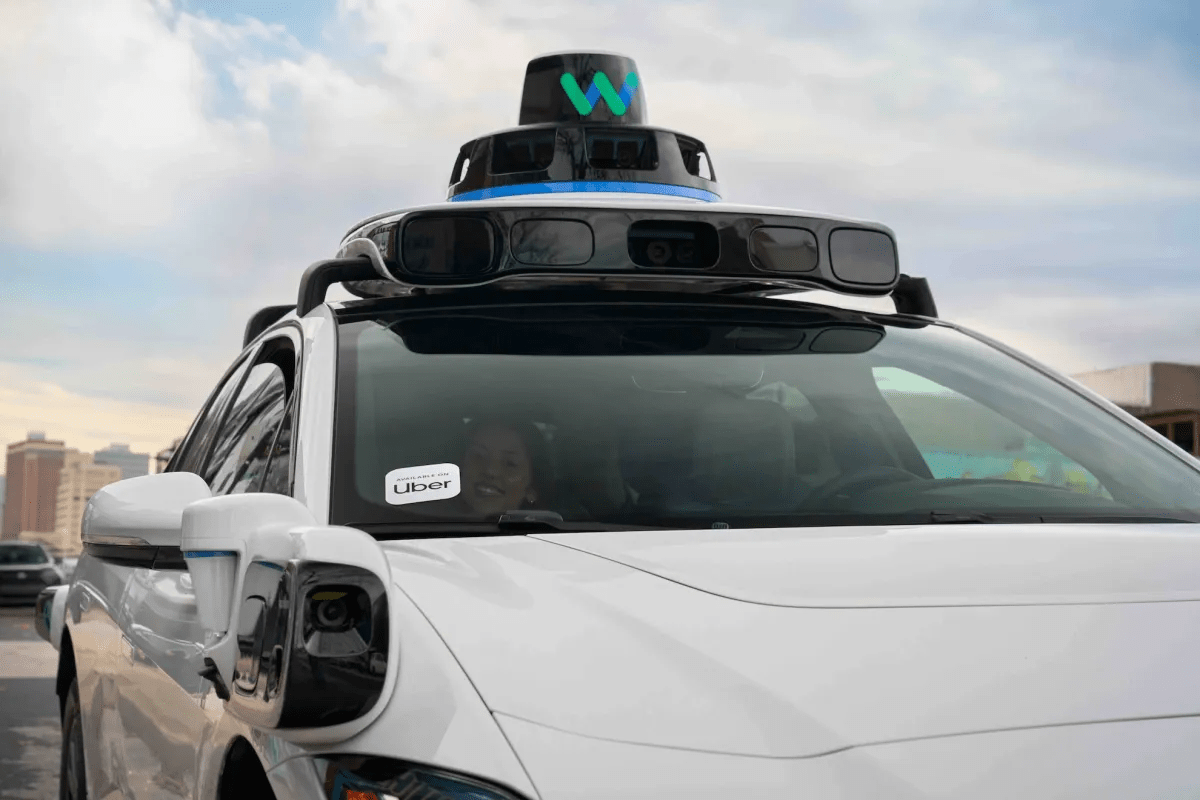
Uber has launched a new internal division, Uber AV Labs, to address a growing demand from autonomous vehicle partners: driving data. The initiative focuses on collecting real-world road data through Uber-operated vehicles equipped with sensors. Importantly, this move does not signal a return to building Uber-owned robotaxis.
Instead, Uber AV Labs positions Uber as a data enabler for autonomous vehicle companies. These partners already operate autonomous fleets, yet they continue to seek additional data. The emphasis reflects a broader shift in autonomous vehicle development toward reinforcement learning models that rely on large volumes of real-world scenarios.
Uber confirmed that no contracts have been signed yet. However, the company has acknowledged interest from multiple autonomous vehicle partners. The central value proposition is access to diverse, real-world driving environments at scale.
As autonomous systems evolve, the scarcity is no longer algorithms. The constraint is data volume. Uber AV Labs is designed to address that constraint directly.
Real-world data exposes the physical limits of autonomous vehicle fleets
Autonomous vehicle companies face a structural limitation. The size of their fleets defines how much driving data they can collect. Simulation tools help address edge cases, yet they cannot fully replicate real-world unpredictability.
Actual roads introduce rare, complex situations that simulations struggle to reproduce. These include unusual traffic behaviors, ambiguous road conditions, and unexpected human actions. Discovering such cases requires sustained driving across varied locations.
Uber highlighted that even long-operating autonomous programs encounter issues. This underscores the value of broader data pools. By operating sensor-equipped vehicles across multiple cities, Uber AV Labs expands exposure to diverse conditions.
The approach treats data collection as a volume-driven challenge. More miles driven across more environments increase the likelihood of identifying problematic scenarios early.
This strategy aligns with how autonomous vehicle development now prioritizes learning from scale rather than static rule sets.
Uber AV Labs focuses on semantic data, not raw sensor feeds
Uber will not provide partners with raw sensor data. Instead, the company plans to process and refine collected information into structured, usable formats. This semantic layer enables partners to integrate insights directly into their driving software.
The processed data supports improvements in real-time path planning. It allows autonomous systems to interpret complex situations more effectively. This intermediary step reduces integration friction for partners.
Additionally, Uber AV Labs will test partner software in “shadow mode.” In this setup, partner systems run alongside human drivers without controlling the vehicle. Any divergence between human decisions and autonomous responses is flagged.
These discrepancies highlight gaps in driving logic. Over time, this feedback loop helps autonomous systems adopt more human-like driving behavior. The method also identifies software shortcomings before they manifest in live deployments.
Targeted data collection differentiates Uber AV Labs from fleet-scale models
Uber’s model differs from approaches that rely on millions of consumer vehicles. Instead of broad, passive data capture, Uber AV Labs emphasizes targeted deployment. The company can choose specific cities based on partner needs.
With operations across hundreds of cities, Uber can tailor data collection geographically. This flexibility allows partners to focus on environments relevant to their deployment goals.
The division is currently small, starting with a single prototype vehicle. However, Uber expects to scale the team significantly within a year. The pace reflects urgency rather than experimentation.
Uber has also stated that it will not charge for the data initially. The strategic value lies in accelerating partner progress, not immediate revenue. The company views ecosystem advancement as a higher priority.
As Uber builds this foundation, it positions itself as an infrastructure layer rather than a competitor.
Why data democratization could reshape the autonomous vehicle ecosystem
Uber frames Uber AV Labs as an industry-level intervention. By lowering barriers to high-quality driving data, the initiative aims to accelerate collective progress. This approach shifts competitive dynamics toward shared infrastructure.
The strategy acknowledges that no single company can capture every driving scenario alone. Collaboration through shared data pipelines becomes a practical necessity.
For businesses navigating similar platform challenges, this model offers a reference point. Explore the services of Uttkrist. Our services are global in nature and highly enabling for businesses of all types. Drop an inquiry in your suitable category:
https://uttkrist.com/explore/
As data becomes the primary differentiator, the question shifts from ownership to access. Uber AV Labs represents a calculated move to control access without owning the outcome.
Could this data-first model become the default framework for scaling autonomous technologies responsibly?
Explore Business Solutions from Uttkrist and our Partners’, https://uttkrist.com/explore
https://qlango.com/